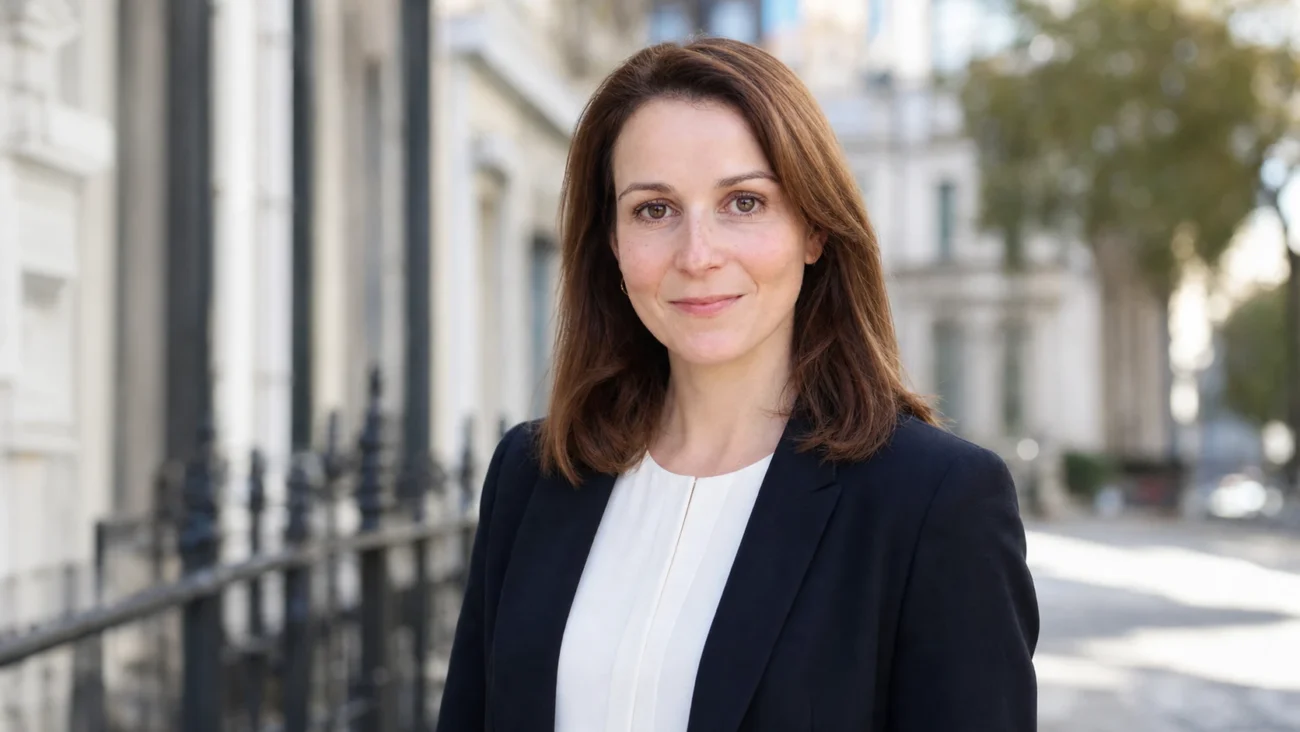
Annabel Denham has become a familiar voice in British political journalism through her work as a columnist, editor, policy researcher, and television commentator. Her appearances on national political programs and her writing for The Telegraph have also prompted growing interest in her personal background, especially her age.
Annabel Denham’s exact date of birth has not been publicly confirmed. Based on her documented education timeline, she was likely born around 1984 or 1985, which would make her approximately 40 or 41 years old as of July 2026. That estimate should not be presented as an established fact because Denham has not publicly disclosed her birthday.
Her professional record is much clearer. She has worked in business journalism, Parliament, entrepreneurship research, free-market policy communications, newspaper editing, and political broadcasting. Her rise shows how a journalist can move from specialist economic reporting into a wider role shaping and debating national political arguments.
Annabel Denham’s Age and Date of Birth
The exact answer to the search for “Annabel Denham age” is that her age remains private. Her official author profiles and professional biographies do not list a birth date, birth year, or current age. No reliable first-person interview has been identified in which she gives those details.
Her education history provides the strongest basis for an estimate. Denham studied History and French at the University of Manchester from 2004 to 2008. A student beginning a British undergraduate course in 2004 through the usual school route would often have been about 18 or 19.
An Oundle School alumni publication also appears to identify her as a former pupil from the 2003 leaving group. That timing would fit a student who completed school in 2003 and entered university the following year, possibly after a gap year.
These dates point to a likely birth year of 1984 or 1985. She would therefore probably be 40 or 41 in July 2026, depending on when her birthday falls. There is still room for error because students do not always follow the standard education timeline, so a precise age cannot be responsibly confirmed.
Early Life and Family Background
Little verified information is available about Denham’s childhood. Her birthplace, hometown, parents, siblings, and early family life have not been included in the professional biographies published by her employers or former organizations.
She appears to have attended Oundle School, an independent boarding and day school in Northamptonshire. The alumni notation associated with her suggests that she belonged to Dryden House and left in 2003, though she has not written publicly in detail about her school years.
Denham has built her public identity around journalism and ideas rather than family history. That choice has allowed her to remain visible professionally while keeping relatives and private relationships away from political debate.
There is also no verified evidence that she is related to another public figure with the Denham surname. Shared surnames sometimes lead biography websites to suggest family connections, but such claims require direct evidence.
Education and Interest in France
Denham attended the University of Manchester, where she completed a Bachelor of Arts degree in History and French between 2004 and 2008. The combination gave her training in political and social history alongside language and cultural study.
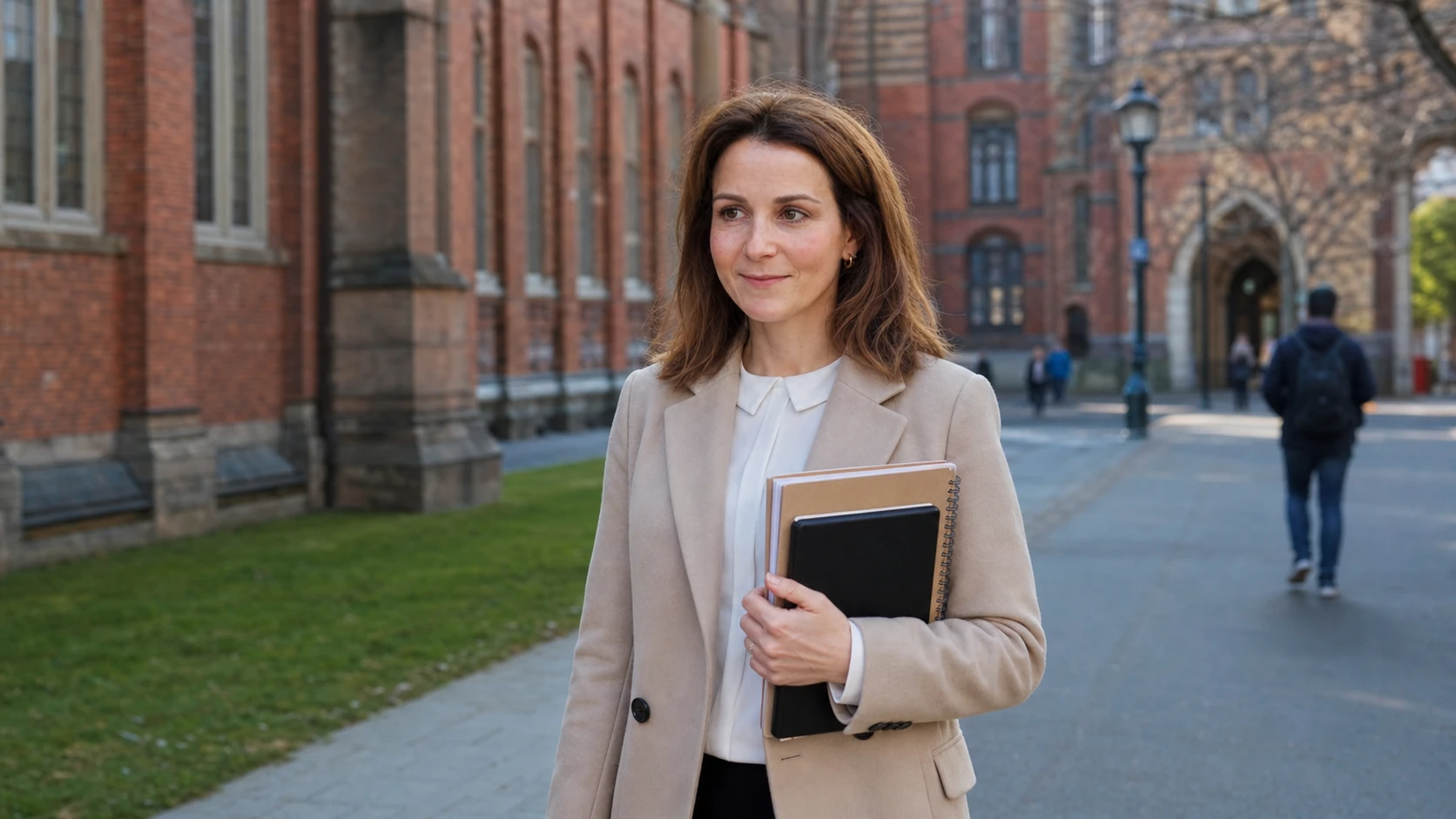
She has described herself in professional profiles as a Francophile, indicating a lasting interest in France and French culture. That interest is consistent with her university studies, although it does not reveal whether she lived or worked in France for an extended period.
Her degree did not place her on a single fixed career path. Instead, she moved into journalism and public policy, fields where historical context, research, writing, and the ability to assess competing claims are central skills.
The university dates are also the main reason her likely age can be estimated with some confidence. They provide a clearer reference point than unsourced celebrity-style biography pages that publish precise birthdays without showing where the information came from.
Early Career in Business Journalism
Denham began building her public career in business journalism. She worked at City A.M., the London-based newspaper focused on finance, companies, markets, and economic policy.
Her roles there have been described in slightly different ways across professional profiles, including deputy business features editor and positions connected to entrepreneurs and business coverage. The varying titles appear to reflect changing responsibilities rather than a dispute about where she worked.
This period gave Denham direct experience of reporting on founders, companies, investment, taxation, and regulation. Those subjects later became central to her policy work and political columns.
Business journalism also placed her close to debates about the relationship between private enterprise and government. Her later writing often argues that regulation, public spending, and poorly designed incentives can produce costs that officials fail to acknowledge.
Work in Parliament
Denham later worked as a parliamentary researcher for Peter Lilley, a senior Conservative politician who had served as a cabinet minister under Margaret Thatcher and John Major. The role brought her from external reporting into the daily work of political research.
Parliamentary researchers may prepare briefing material, examine policy proposals, support speeches, and track political developments. Denham’s exact assignments have not been publicly documented, but the position gave her experience inside Westminster before she became a regular political commentator.
Her association with Lilley also placed her near a strand of Conservative politics that emphasized free markets, lower taxation, and scepticism about state expansion. Those themes later became familiar elements of her own published arguments.
Denham has not become an elected politician herself. Her influence comes through journalism, policy organizations, editing, and broadcasting rather than party office or public election.
The Entrepreneurs Network
From 2015 to 2020, Denham worked at The Entrepreneurs Network, a research organization focused on business founders and public policy. She eventually became its associate director.
Her work included writing and editing research, managing communications, supporting the All-Party Parliamentary Group for Entrepreneurship, and helping connect business owners with policymakers. This position allowed her to combine journalism with policy research and public affairs.
One of her best-known projects during this period was the Female Founders Forum. The initiative examined why women-led companies often received less investment and faced difficulty gaining access to finance, business networks, and experienced mentors.
Denham’s work on the forum did not simply repeat broad claims about inequality. It focused on measurable issues such as funding, follow-on investment, growth, professional networks, and the visibility of successful female founders.
She became a regular public speaker on entrepreneurship and women in business. That work expanded her profile beyond newspaper readers and helped establish her as a commentator on the practical effects of economic policy.
Female Founders Forum
The Female Founders Forum was established in 2016 through The Entrepreneurs Network and Barclays. Its reports considered why fewer women-led businesses reached the scale achieved by many male-led companies.
Denham served as one of the project’s main public representatives. She contributed to research, public discussions, and recommendations aimed at investors, policymakers, and business organizations.
The forum argued that women entrepreneurs often had less access to investment networks and role models. It also rejected the idea that women-led companies were naturally less ambitious or less capable of growth.
Denham’s approach reflected her wider political outlook. She supported expanding access to capital and contacts while remaining cautious about compulsory quotas or policy solutions that placed the state at the center of every problem.
The project gave her a detailed record in an area often discussed through slogans. It also showed that her career involved more than newspaper opinion writing, since she had direct experience producing reports and organizing policy discussions.
Institute of Economic Affairs
In 2020, Denham joined the Institute of Economic Affairs as director of communications. The IEA is a British free-market think tank associated with arguments for lower taxation, private enterprise, lighter regulation, and limits on government power.
She began the role as the United Kingdom entered the COVID-19 crisis. That timing placed her at the center of debates about lockdowns, travel rules, public spending, employment, and civil liberties.
As communications director, Denham was responsible for presenting the organization’s research and arguments to journalists, broadcasters, policymakers, and the wider public. She appeared on television and radio to discuss economic and political events.
Her role strengthened her reputation as a clear defender of free-market ideas. It also made her a target for critics who disagreed with the IEA’s position on regulation, health restrictions, and the size of the state.
Denham’s public style during this period was direct rather than cautious. She often framed policy debates around tradeoffs, asking what restrictions cost, who paid for government promises, and whether public programs achieved their stated goals.
Career at The Telegraph
Denham later joined The Telegraph, where she worked on the newspaper’s opinion and comment coverage. Her titles have included deputy comment editor, acting comment editor, columnist, and senior political commentator.
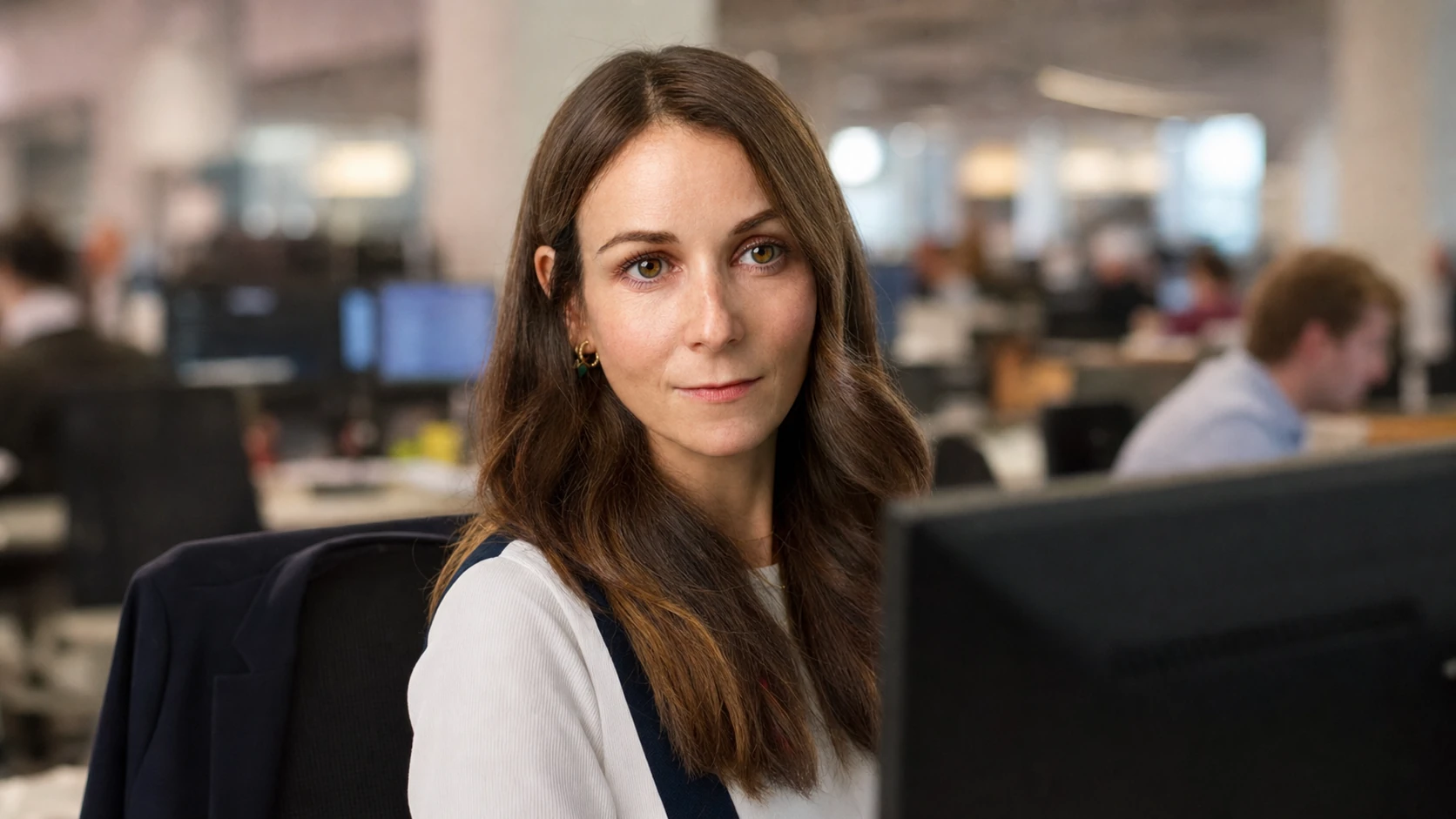
Editing an opinion section involves more than writing personal columns. It requires commissioning contributors, reviewing arguments, checking copy, selecting subjects, and deciding how the publication responds to major political events.
Denham eventually became more visible as a writer and broadcaster in her own right. Her columns have addressed welfare, taxation, work, childcare, fertility, public services, immigration, government regulation, and the direction of Britain’s political parties.
Her writing usually starts from a centre-right or free-market position. She frequently questions whether government programs produce the benefits promised by their supporters and whether their costs have been honestly presented.
She has also criticized Conservative governments when she believes they have failed to reduce spending, support enterprise, or follow the principles they claim to represent. That record makes her better described as an ideological commentator than as a party spokesperson.
Television and Public Recognition
Denham’s public recognition increased through television and radio appearances. She has appeared on BBC News, Sky News, GB News, political podcasts, and radio panel programs.
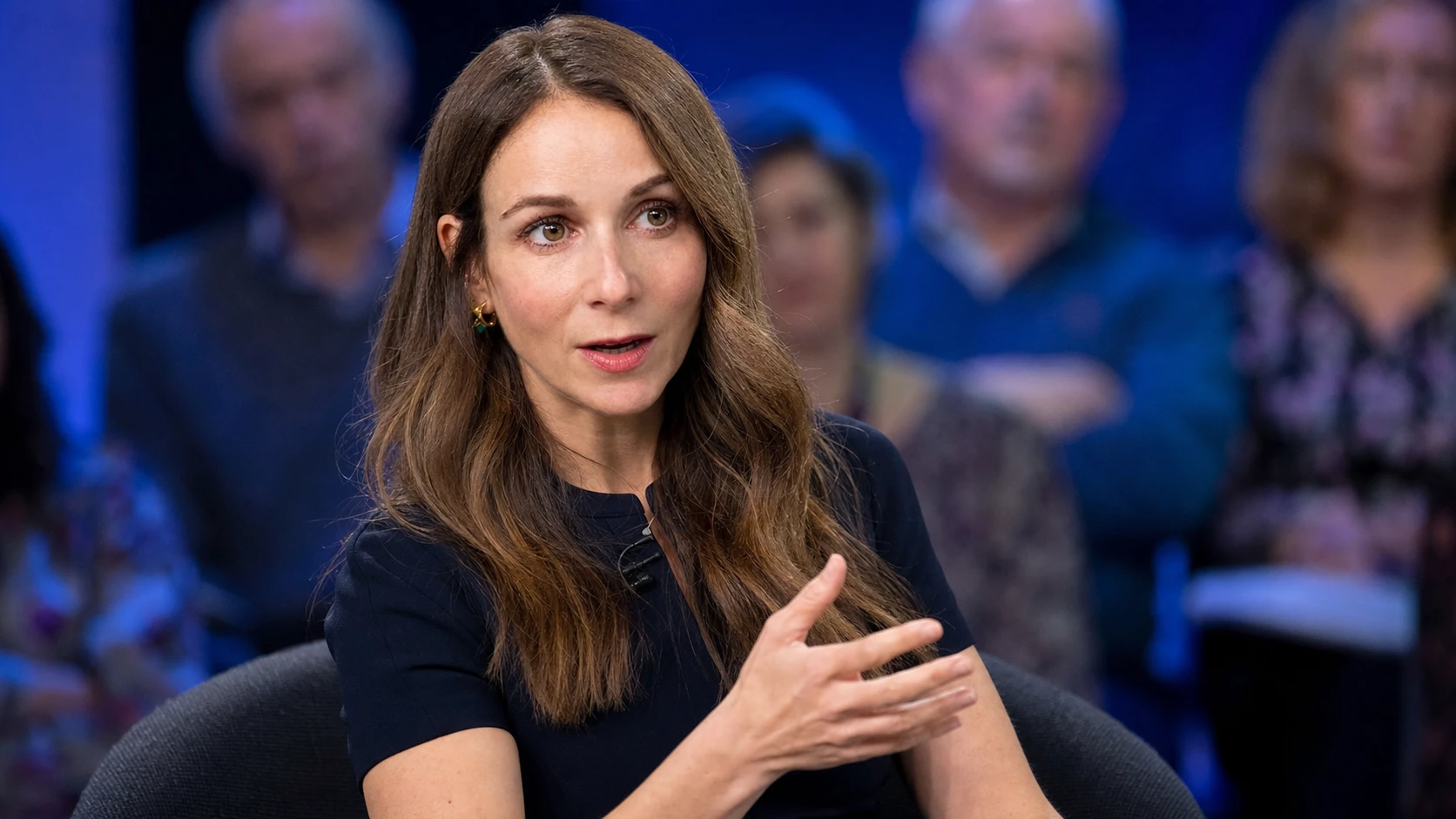
Her appearances on BBC Question Time introduced her to a broader audience. The program places politicians, journalists, campaigners, and public figures before a live audience to debate current political questions.
Denham appeared on the program in Llandudno in June 2025, Shrewsbury in October 2025, and Kettering in March 2026. Repeated appearances suggested that broadcasters increasingly viewed her as a recognizable political voice rather than only a newspaper editor.
Television also changed the type of attention she received. Readers who encountered her through columns were mainly interested in her arguments, while television viewers began searching for personal details such as her age, education, marriage, and family.
Her rise in broadcasting has not produced a large public record about her private life. She continues to disclose far more about her political views than about her home or relatives.
Political Views and Public Image
Denham is widely associated with free-market and centre-right political thought. That description is supported by her work at the IEA, her parliamentary role with Peter Lilley, and her writing for publications including The Telegraph, The Spectator, and CapX.
She often argues for lower public spending, fewer economic restrictions, individual responsibility, and a smaller role for government. She has questioned policies involving childcare entitlements, welfare systems, workplace rules, public-health controls, and civil-service expansion.
Her writing attracts both support and criticism because she rarely hides her conclusions behind neutral language. Readers who share her outlook value the clarity of her arguments, while opponents often challenge her assumptions about markets, inequality, and public services.
Denham should still be understood as a journalist and commentator rather than an elected representative. There is no dependable evidence that she currently holds formal office in the Conservative Party or any other political party.
Her public image rests on intellectual consistency and willingness to debate. Even critics generally encounter a recognizable set of beliefs rather than a commentator who changes position to follow daily political fashion.
Marriage, Children, and Private Life
Denham’s marital status is not publicly confirmed. Her main professional biographies do not name a husband, wife, or partner, and she has not made her relationship history part of her public profile.
The absence of a public spouse’s name does not prove that she is unmarried. It means only that no dependable source has established her current relationship status.
Denham has written in personal terms about maternity care and giving birth. That indicates that she has experience of childbirth, but she has not publicly confirmed the names, number, ages, or sexes of any children in the professional sources available.
That privacy deserves respect, especially because any children may be minors and are not public figures. Her views on childcare, birth rates, or maternity services can be assessed without exposing private family details.
Net Worth and Income
Annabel Denham’s net worth is not publicly confirmed. No reliable financial disclosure lists her savings, investments, property, debts, or total assets.
Her income has likely come from journalism, editing, policy research, communications work, public speaking, and broadcasting. The exact amounts paid for those roles have not been published.
Online websites that assign her a precise net worth are therefore making estimates without enough evidence. A senior newspaper title may suggest a stable professional income, but it does not allow a trustworthy calculation of personal wealth.
There is also no confirmed public information about major business holdings, inherited wealth, property investments, or endorsement contracts. Any claim about her finances should remain general unless supported by direct records.
Recent Work and Current Status
During 2024, Denham continued writing about British politics, economic policy, work, childcare, public services, and demographic change. Her articles reflected her established interest in how government decisions affect taxpayers, employers, and families.
Her national profile increased in 2025 through repeat appearances on BBC Question Time. Those programs placed her alongside MPs, union figures, campaigners, and commentators from across the political spectrum.
By 2026, she was identified publicly as a senior political commentator and columnist at The Telegraph. She had moved from being known mainly for editing the opinion pages to becoming one of the newspaper’s visible political voices.
Her March 2026 Question Time appearance and continued radio work showed that broadcasting had become a regular part of her career. She remains active in political journalism, though her exact future assignments and contractual arrangements are private.
Frequently Asked Questions
How old is Annabel Denham?
Annabel Denham’s exact age is not publicly confirmed. Her education history suggests that she was likely born around 1984 or 1985, making her approximately 40 or 41 years old as of July 2026.
What is Annabel Denham’s date of birth?
Her full date of birth has not been published by a reliable official source. Claims that give a precise day and month without evidence should be treated cautiously.
Where did Annabel Denham study?
She studied History and French at the University of Manchester from 2004 to 2008. She also appears in an Oundle School alumni publication connected to the 2003 leaving group.
What is Annabel Denham known for?
She is known as a British political journalist, editor, and commentator. Her career includes work at City A.M., The Entrepreneurs Network, the Institute of Economic Affairs, Parliament, and The Telegraph.
Is Annabel Denham married?
Her marital status is not publicly confirmed. Reliable professional biographies do not identify a spouse or provide a documented relationship history.
Does Annabel Denham have children?
Her writing indicates that she has personal experience of childbirth. She has not publicly confirmed further details about any children, including their names or ages.
What is Annabel Denham’s net worth?
Her net worth is unknown. No credible source has published a verified financial estimate based on her assets, income, investments, and liabilities.
Conclusion
Annabel Denham’s age remains one of the few basic biographical details that cannot be stated with certainty. Her school and university timeline suggests that she is around 40 or 41 in July 2026, but her birthday has stayed private.
Her career offers a much fuller picture. She has moved through business journalism, parliamentary research, entrepreneurship policy, think-tank communications, opinion editing, and national broadcasting.
Denham matters because she has become a clear and increasingly visible participant in British political debate. Her arguments about markets, public spending, work, regulation, and personal responsibility have earned both support and criticism.
The careful way to describe her is therefore straightforward: she is an established British journalist and political commentator whose professional record is well documented, while much of her family life, finances, and exact age remain outside the public record.
