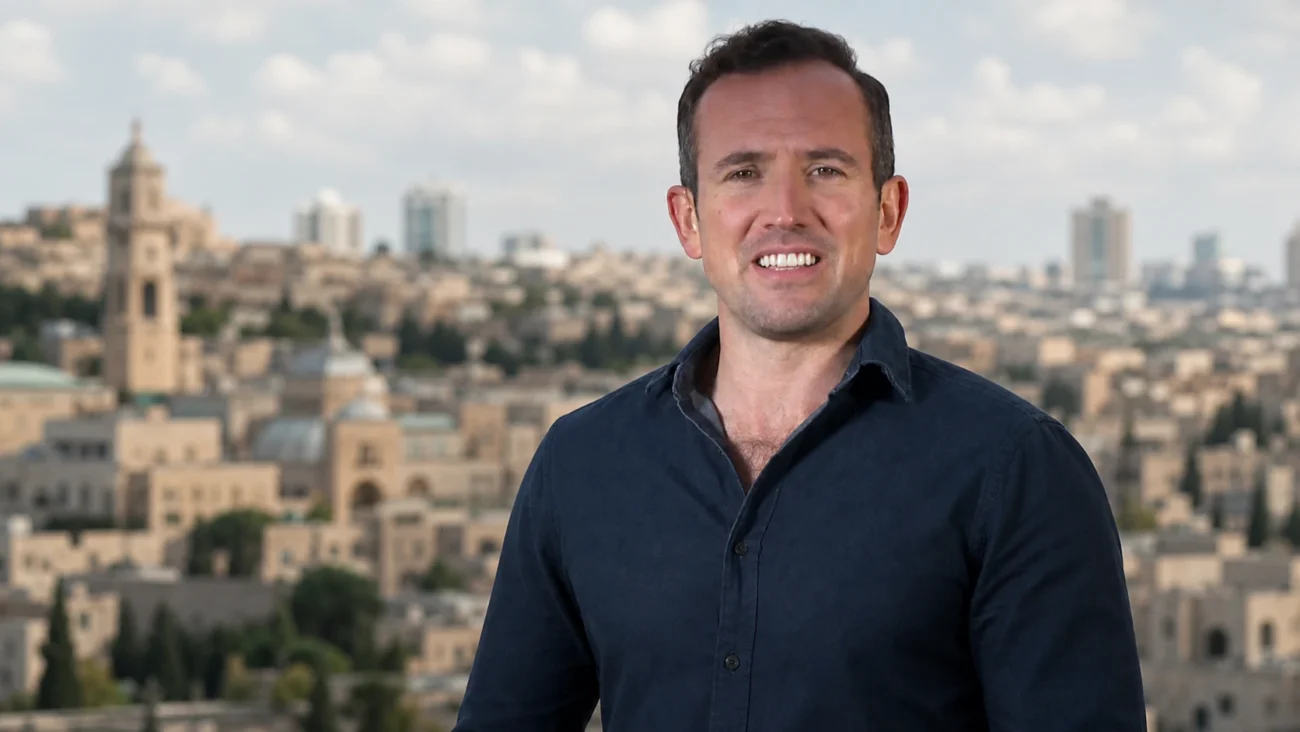
Hugo Bachega is a Brazilian-born British journalist whose reporting has taken him from political institutions in Brazil to war zones in Ukraine and the Middle East. He works as a BBC Middle East correspondent and is known for clear, measured coverage of armed conflict, diplomacy, displacement, and the experiences of civilians living through major crises.
Many viewers first remembered his name after a Russian missile attack interrupted his live BBC report from Kyiv on October 10, 2022. Bachega stopped speaking, ducked, and moved with his team to safety as explosions struck the Ukrainian capital. The widely shared footage captured the risks faced by field correspondents, but his career had already been developing for years through work in Brazil, Egypt, the United Kingdom, the United States, and other international assignments.
Bachega keeps most of his private life outside public view. His exact age, date of birth, parents, marital status, and personal finances have not been reliably confirmed. What can be documented is a substantial reporting career built across languages, countries, news formats, and some of the most difficult stories of the past two decades.
Early Life and Nationality
Hugo Bachega was born in Brazil and is publicly described as a Brazilian-born British journalist. His exact birthplace and date of birth have not been established through a dependable public biography, so reports assigning him a specific hometown, birthday, or age should be treated cautiously.
Brazil shaped both his early identity and the beginning of his professional life. He entered journalism in São Paulo and later covered national politics from Brasília, giving him experience inside one of Latin America’s largest and most politically active democracies. His Brazilian background also allowed him to produce work for Portuguese-speaking audiences as well as international English-language news services.
Bachega later became a British citizen or was publicly identified as British, although the timing and circumstances have not been disclosed. His career has been international for much of his adult life, with professional bases that have included São Paulo, Cairo, London, Washington, Kyiv, and Beirut.
His education has not been fully documented. There is no widely available official biography naming a university, degree, or graduation date. Public reporting does confirm that he studied Arabic while living in Cairo, with attention to the Egyptian dialect, as he developed a deeper professional connection to the Middle East.
Beginning His Career at Reuters
Bachega started his journalism career as an intern with Reuters in São Paulo. He later became a reporter for the international news agency, covering Brazilian government policy, politics, business, labor disputes, and legal affairs.
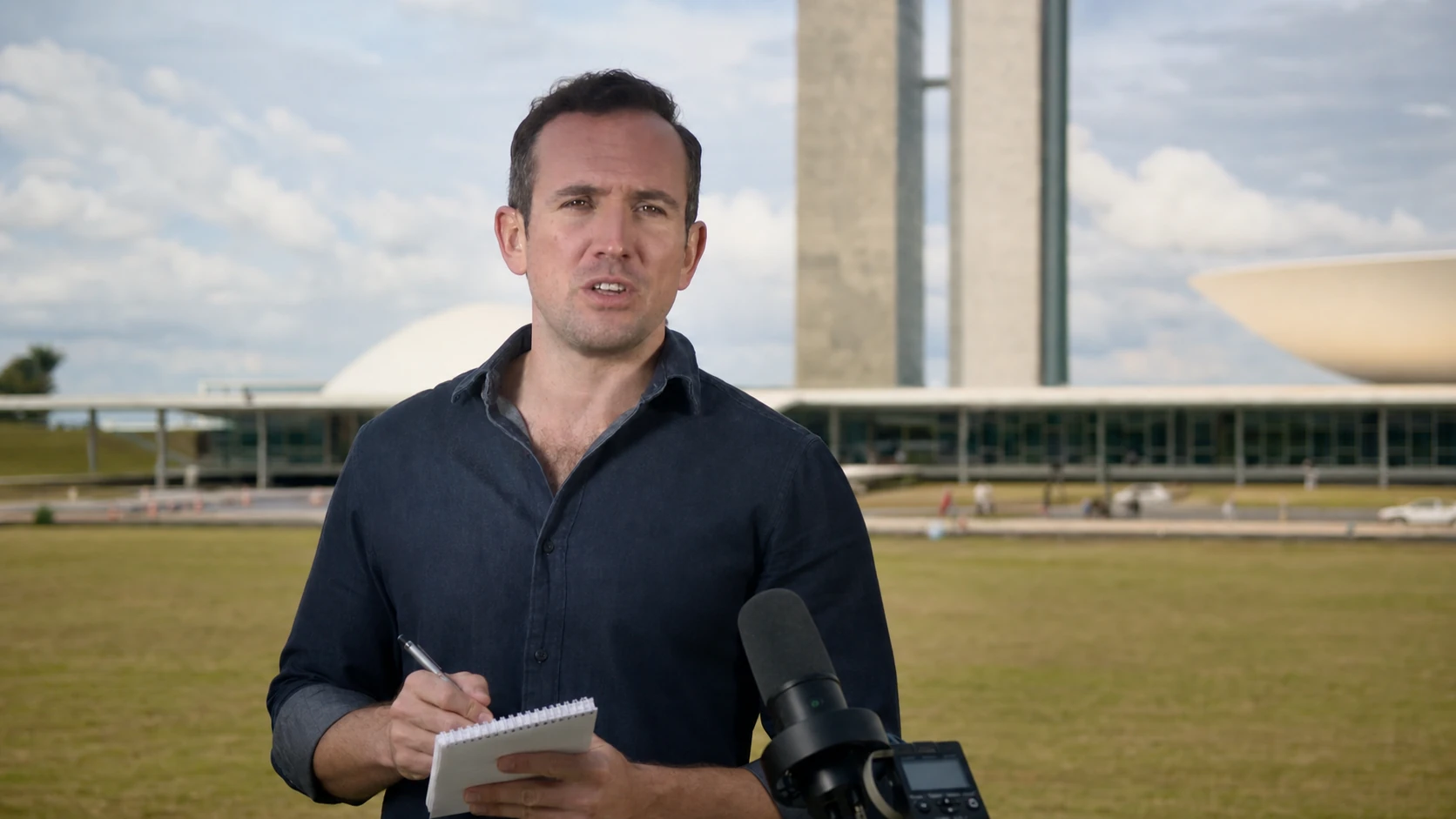
Agency journalism requires speed and restraint. Reuters reporters often produce concise articles for newspapers, broadcasters, financial services, and digital outlets around the world. The work demands quick verification, careful attribution, and an ability to explain complicated events without relying on personal opinion.
Bachega’s Reuters assignments show that he developed those skills through a varied range of subjects. He reported on negotiations surrounding Foxconn’s plans to manufacture iPads in Brazil, a story involving industrial policy, tax incentives, foreign investment, and government economic strategy. He also covered public-sector strikes and disputes involving federal employees, placing salary demands and labor action within the wider pressures facing the Brazilian government.
He contributed to reporting on the Mensalão corruption case, one of the most consequential political trials in modern Brazil. The case involved senior figures connected to the Workers’ Party and generated intense debate about corruption, party financing, and accountability. Covering such proceedings required Bachega to follow legal arguments while explaining their political meaning to readers outside Brazil.
This period established him as more than a television personality. Long before he became recognizable on BBC broadcasts, he was learning the less visible routines of reporting: reading official documents, checking statements, speaking with sources, tracking court decisions, and meeting strict deadlines.
Cairo, Arabic Studies, and Detention
Bachega later moved to Cairo, where he worked as a freelance journalist and studied Arabic. Egypt was going through a period of political instability following the 2011 revolution, the election of President Mohamed Morsi, his removal by the military in 2013, and the violent unrest that followed.
Living in Cairo placed Bachega close to events that were reshaping Egypt and the wider Arab world. He contributed reporting to Brazilian media, including O Globo, while developing a working understanding of the local language and culture. Studying the Egyptian form of Arabic showed a long-term interest in the region rather than a brief assignment arranged only after a crisis began.
In August 2013, Egyptian authorities detained Bachega while he was reporting in Cairo. Police reportedly confiscated his camera and held him for about seven hours before releasing him. Brazilian diplomatic officials became involved after contact with him was lost.
The detention reportedly concerned questions about authorization to work as a journalist. It occurred during a period in which reporters faced arrests, physical attacks, restrictions, and suspicion from authorities and political groups. Bachega’s experience offered an early example of the personal risks that would become part of his later work in conflict zones.
Cairo also appears to have influenced the direction of his career. The combination of language study, freelance reporting, and direct exposure to political violence prepared him for later assignments in which official access, personal safety, and rapidly changing information had to be managed at the same time.
Joining the BBC
Bachega moved into BBC journalism after his work with Reuters and his time in Egypt. He worked for BBC Brasil, now known as BBC News Brasil, and later became part of the organization’s wider international reporting operation.
His BBC work covered subjects far beyond armed conflict. He reported on Brazilians imprisoned or facing severe criminal penalties abroad, including cases involving alleged drug trafficking in Egypt and Indonesia. These assignments combined legal reporting with questions about poverty, recruitment, exploitation, and the vulnerability of young people used as drug couriers.
Bachega also reported from the United States. His work examined homelessness and housing pressure in cities where economic growth existed beside rising rents and shortages of affordable accommodation. Rather than presenting homelessness as a problem caused by one personal choice, he explored how wages, property costs, social services, and public policy interacted.
He spent time working from Washington and contributed to the BBC’s coverage of Latin America. During the COVID-19 pandemic, he wrote about the political controversy surrounding Brazil’s hosting of the Copa América in 2021. The tournament became connected to broader criticism of President Jair Bolsonaro’s response to the health crisis.
His reporting also addressed environmental destruction and violence affecting Indigenous communities in the Brazilian Amazon. Coverage of attacks connected to illegal gold mining required attention to land rights, organized criminal activity, government enforcement, and the long history of threats faced by Indigenous people.
These assignments demonstrated the range expected of an international correspondent. Bachega could report on courts, migration, public health, sport, housing, environmental crime, and national politics before being sent into a major war.
Reporting From Ukraine
Russia’s full-scale invasion of Ukraine in February 2022 became the most visible assignment of Bachega’s career. He travelled to Ukraine and reported from cities including Lviv, Dnipro, and Kyiv, as well as areas affected by military operations and attacks on infrastructure.
His work focused on both strategic developments and civilian consequences. He reported on missile strikes, fighting around major cities, damage to electricity and water systems, military advances, prisoners of war, and the international effort to move grain through the Black Sea.
Bachega also documented what war meant for people who weren’t fighting. Families spent nights in shelters, children were separated from familiar routines, and millions of Ukrainians faced displacement. His reports regularly connected battlefield decisions to the daily lives of residents trying to find food, communicate with relatives, or leave dangerous areas.
By May 2022, he had been covering the invasion from its opening stage. He expressed concern that international audiences might become tired of the conflict even though the danger and destruction continued. That problem affects most long-running wars: public attention often falls after the first dramatic weeks, while those living through the conflict remain dependent on outside awareness and support.
Bachega’s Ukraine work also required constant scrutiny of official claims. Russian and Ukrainian authorities released competing accounts of casualties, territorial control, and military operations. A responsible correspondent had to distinguish verified evidence from statements that could not yet be independently confirmed.
The Kyiv Missile Broadcast
On October 10, 2022, Hugo Bachega was reporting live from Kyiv when an explosion interrupted the broadcast. He was speaking to BBC viewers when the sound of an incoming strike or nearby blast caused him to look away from the camera, duck, and leave the position.
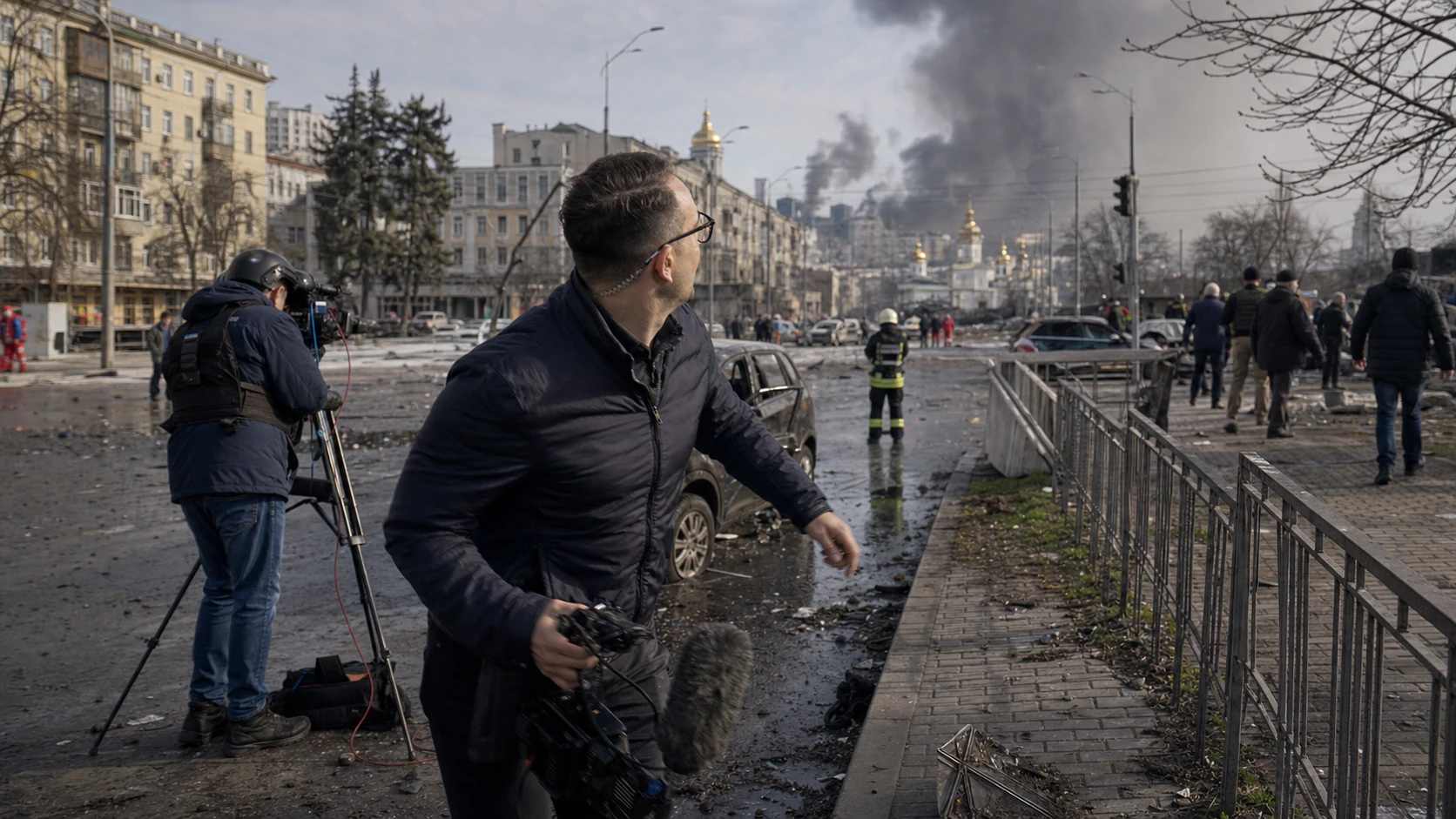
The BBC returned to its studio coverage while Bachega and the crew moved to shelter. He later confirmed that the team was safe. The incident occurred during a large wave of Russian missile strikes against Kyiv and other Ukrainian cities.
Footage of the moment spread widely because it showed how quickly the conditions around a live report could change. A television shot may appear calm and controlled, but the correspondent, camera operator, producer, security staff, and local colleagues may be working within range of missiles, artillery, or air attacks.
Bachega’s reaction was practical rather than theatrical. He stopped the report and followed safety procedures instead of remaining on screen. The moment became a reminder that no live appearance is more valuable than the lives of the journalists producing it.
Although the clip increased his public recognition, it shouldn’t define his entire career. He had already spent months in Ukraine and continued reporting after the attack. His work consisted not only of dramatic live television but also of interviews, written analysis, radio reports, and repeated visits to communities affected by the war.
BBC Middle East Correspondent
Bachega later moved to Beirut and became a BBC Middle East correspondent. The role returned him to a region where he had previously studied and reported, but under very different conditions.
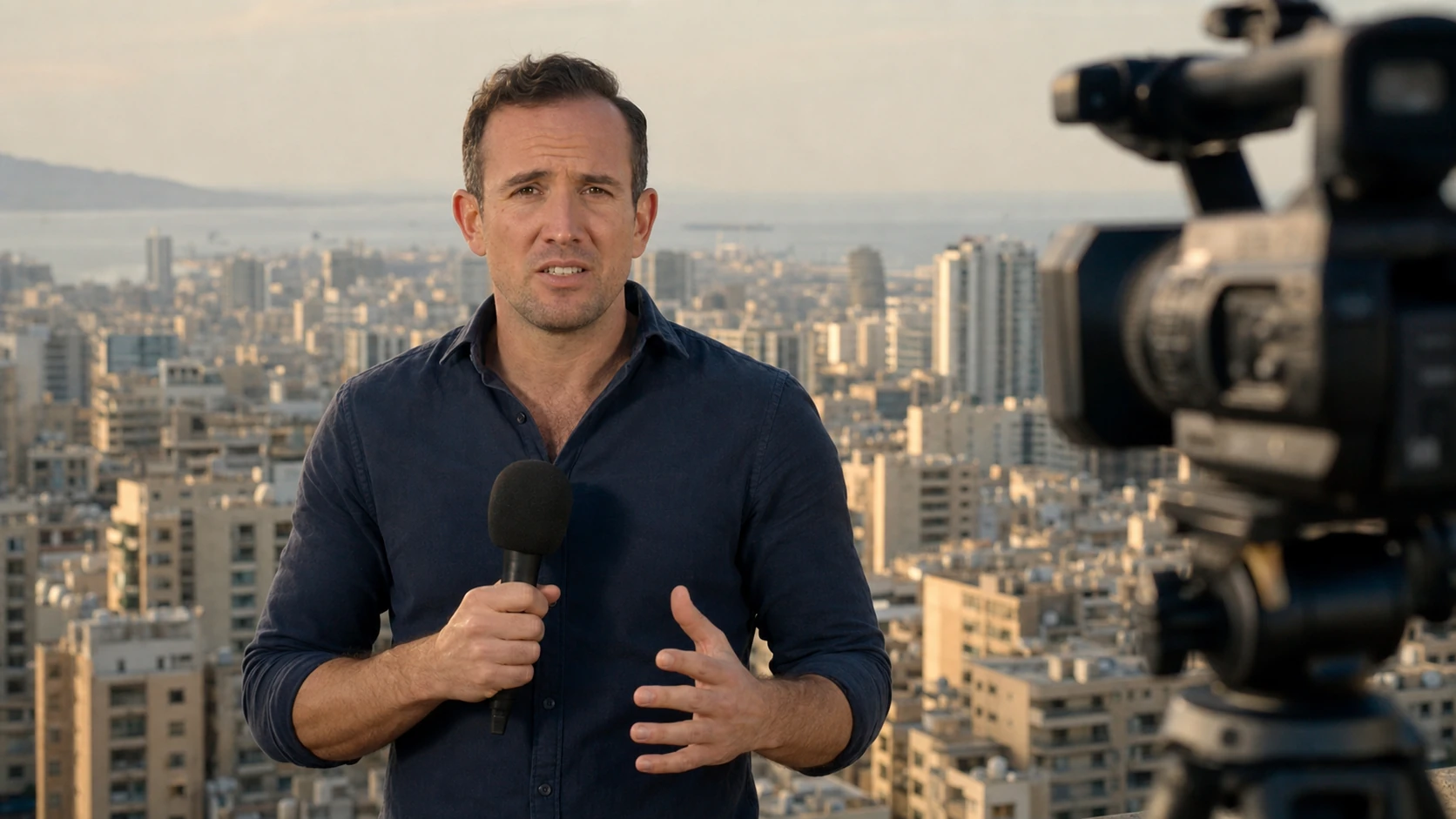 His posting came during a period of severe instability following the Hamas-led attacks in Israel on October 7, 2023, Israel’s war in Gaza, and the escalation of fighting between Israel and Hezbollah along the Lebanon-Israel border. Beirut provided a base from which he could cover Lebanon while also following developments involving Israel, the Palestinian territories, Syria, Iraq, and Iran.
The assignment requires more than reporting explosions or official speeches. Events in the Middle East often involve armed organizations, state militaries, foreign governments, religious communities, displaced populations, and generations of political history. Bachega’s task is to explain immediate developments without suggesting that one brief report can settle every disputed question.
He has reported from southern Lebanon and from communities affected by Israeli strikes and Hezbollah operations. His work has examined displacement, civilian fear, ceasefire efforts, political pressure on Hezbollah, and the possibility that conflict could expand beyond national borders.
Bachega has also covered the diplomatic struggle surrounding Iran’s nuclear program and its relationship with the United States and other governments. These stories require him to move between field reporting and political analysis, explaining how negotiations conducted far from Beirut may affect security across the region.
His work has appeared on BBC television, radio, podcasts, and digital platforms. He has contributed to programs including the BBC World Service, Global News Podcast, The Global Story, and From Our Own Correspondent. Each format requires a different style, from short live updates to longer narrative reporting.
Reporting Style and Public Reputation
Bachega is known for a calm delivery, especially during breaking news. His broadcasts tend to focus on confirmed developments, the source of official claims, and the effect of events on civilians. That measured tone has helped him explain complex situations during periods when facts are limited and misinformation spreads quickly.
His reports often begin with people rather than institutions. He has interviewed displaced residents, emergency workers, prisoners, families, and members of communities trying to return to damaged towns. These accounts allow audiences to see how military and political decisions affect individuals.
That approach doesn’t remove the need for broader analysis. Bachega also explains the interests of governments, military forces, and armed groups. His job requires him to show how local experiences connect to regional strategy without allowing the human cost to disappear behind technical language.
Like other correspondents covering Israel, Gaza, Lebanon, Iran, and Hezbollah, Bachega has faced criticism from advocacy organizations and politically engaged audiences. Such criticism often focuses on wording, interview choices, or the amount of context included in a short segment. It should be assessed by comparing the report with available evidence rather than assuming that criticism alone proves wrongdoing or bias.
Conflict reporting always has limits. Journalists may be unable to enter certain areas, independently inspect attack sites, or speak freely with residents. Governments and armed organizations may restrict access or present information designed to support their own positions. Credible reporting depends on making those limits clear.
Hugo Bachega’s Age and Personal Details
Hugo Bachega’s date of birth and exact age are not publicly confirmed. Some online biography pages offer estimated ages or birth years, but those claims lack strong documentation and sometimes conflict with one another.
His exact birthplace within Brazil is also unclear. São Paulo is closely connected to his early career, but working there does not prove that he was born there. No dependable source has established a specific hometown.
Bachega’s height, religion, ethnicity, and childhood experiences have not been documented through an official biography or reliable interview. These details shouldn’t be inferred from his appearance, surname, accent, or nationality.
His accent has attracted interest from some BBC viewers. It reflects a career that began in Brazil and later developed in British and international newsrooms. He speaks English during his BBC work and has produced journalism in Portuguese, while his period of Arabic study in Cairo is also publicly documented.
Family, Marriage, and Relationships
Bachega has kept his family life private. The names and occupations of his parents are not publicly confirmed, and there is no dependable information about siblings or other close relatives.
His relationship status is also unknown. No reliable public source confirms that he has a wife, husband, partner, or children. Websites describing him as married or single generally do not provide evidence that can be independently checked.
This privacy is consistent with his professional image. Bachega uses his public platform primarily to share journalism and information connected to his assignments. He has not built a celebrity brand based on revealing details about his home life.
Respecting that boundary is especially relevant for a journalist working in conflict areas. Publishing unsupported information about relatives or private relationships can create both ethical and security concerns. His public importance comes from his reporting, not from speculation about his household.
Net Worth and Salary
Hugo Bachega’s net worth has not been publicly confirmed. There are no credible financial disclosures showing his savings, property, investments, debts, or other assets.
His salary at the BBC is also private. Compensation for correspondents can vary according to experience, contract terms, location, responsibilities, and whether an employee appears regularly on television. Bachega has not publicly disclosed his income.
Some entertainment and biography websites publish exact net-worth figures for him, but those amounts appear to be estimates without supporting records. They should not be treated as fact.
His known income source is professional journalism. His career has included employment or assignments with Reuters, BBC Brasil, BBC News, and freelance media work. There is no reliable evidence of major outside companies, investment ventures, endorsement deals, or other business interests.
Recent Work and Current Status
As of July 2026, Hugo Bachega remains publicly identified as a BBC Middle East correspondent based in Beirut. His recent work has focused on Lebanon, regional security, US-Iran diplomacy, and conflicts involving Israel and armed groups operating across the region.
His 2024 reporting followed the expansion of fighting along the Israel-Lebanon border and the growing number of people forced from their homes. He also covered attacks involving communications devices used by Hezbollah members, an incident that created fear and confusion across Lebanon.
In 2025, Bachega reported on attitudes within Lebanese communities traditionally associated with Hezbollah. His work examined whether the destruction caused by war and pressure for disarmament were changing how some supporters viewed the organization.
During 2026, he continued contributing to BBC coverage of regional fighting, ceasefire efforts, and nuclear diplomacy involving Iran and the United States. These stories place him at the intersection of military events and negotiations that may determine whether future crises expand or remain contained.
His career remains active rather than retrospective. He continues to travel, interview officials and residents, provide live analysis, and produce longer reports from one of the most closely watched regions in international news.
Frequently Asked Questions
Who is Hugo Bachega?
Hugo Bachega is a Brazilian-born British journalist and BBC Middle East correspondent. He has reported from Brazil, Egypt, the United States, Ukraine, Lebanon, and other locations, focusing on politics, war, diplomacy, and civilian life.
How old is Hugo Bachega?
Hugo Bachega’s exact age is not publicly confirmed. No dependable official biography provides his date of birth, and online claims about his birth year remain unverified.
Where was Hugo Bachega born?
He was born in Brazil, but his exact city of birth has not been reliably established. São Paulo is associated with the beginning of his career, not necessarily his birthplace.
Is Hugo Bachega married?
His marital status is not publicly confirmed. There is no reliable evidence identifying a spouse, partner, or children.
What happened to Hugo Bachega in Ukraine?
On October 10, 2022, a Russian missile attack interrupted his live BBC report from Kyiv. Bachega ducked and moved with his crew to shelter before later confirming that they were safe.
Where does Hugo Bachega work now?
As of July 2026, he works as a BBC Middle East correspondent and is based in Beirut. His assignments cover Lebanon and wider regional developments involving Israel, Gaza, Syria, Iran, Iraq, and international diplomacy.
What is Hugo Bachega’s net worth?
His net worth is not publicly known. Exact figures published by unofficial biography websites are unsupported estimates, and his BBC salary has not been disclosed.
Conclusion
Hugo Bachega built his career through steady reporting rather than personal publicity. His path from Reuters in São Paulo to Cairo, London, Washington, Kyiv, and Beirut reflects years of work across political systems, languages, and reporting formats.
The interrupted Kyiv broadcast gave millions of viewers a direct view of the dangers surrounding his profession. Yet his reputation rests on much more than that moment: political coverage in Brazil, reporting under pressure in Egypt, sustained work during the war in Ukraine, and continuing coverage of the Middle East.
His private biography remains limited because he has chosen not to make his age, family, relationships, or finances part of his public identity. That lack of personal disclosure shouldn’t be replaced with speculation.
Bachega matters because he helps audiences understand events that are often confusing, contested, and dangerous to report. His standing will continue to depend on evidence, careful attribution, and his ability to connect major political decisions with the people who live through their consequences.
