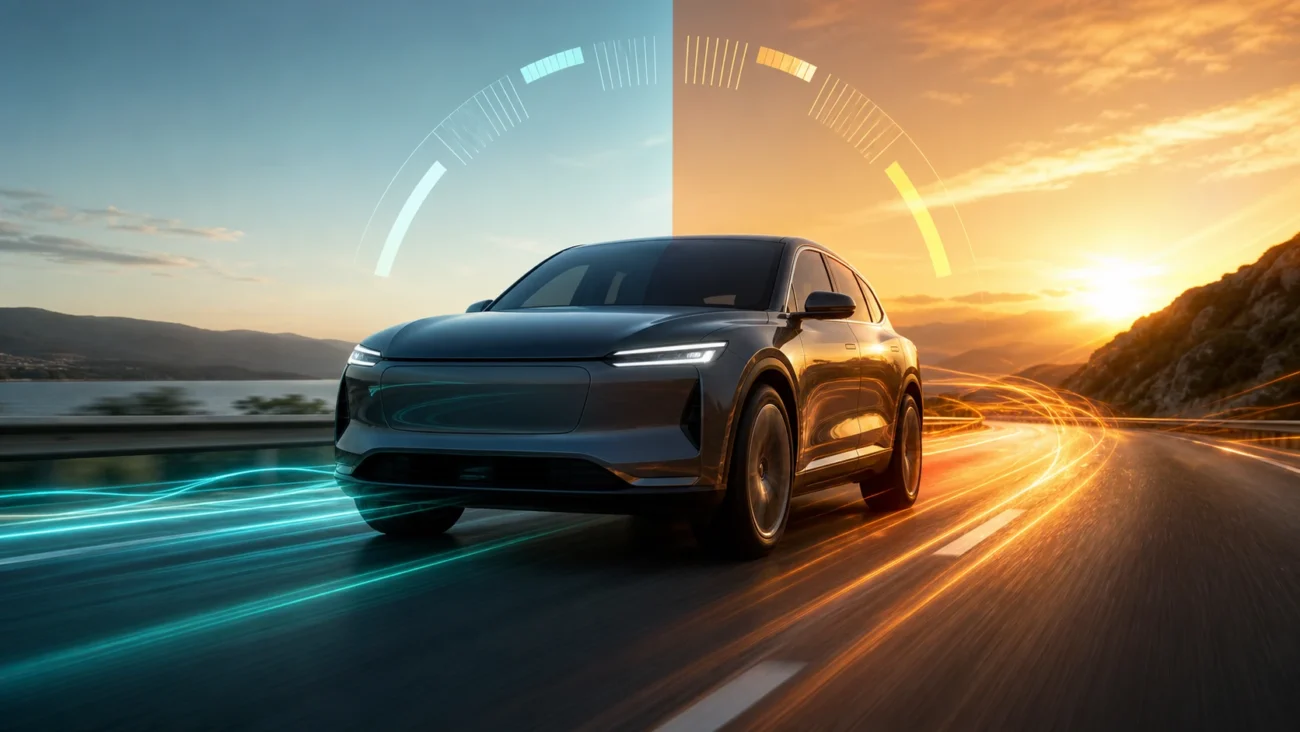
The Cadillac LYRIQ’s driving modes can affect real-world energy use, but they don’t give the vehicle separate, guaranteed range figures. Switching from Tour to Sport doesn’t change the battery’s physical capacity or instantly remove a fixed number of miles. Instead, each mode changes how the accelerator, steering, braking, suspension and, on some versions, the propulsion system respond.
That distinction matters because owners often see the estimated range move after changing a setting and assume the battery has suddenly lost energy. In most cases, the vehicle is revising its prediction based on expected consumption, recent driving and current conditions. The actual effect depends on how the driver uses the mode.
Tour is usually the best setting for predictable efficiency. Sport can increase consumption if its sharper response encourages stronger acceleration, while Snow/Ice focuses on traction rather than energy savings. My Mode can be configured for gentler or more aggressive responses, and performance features such as Velocity Max can draw more battery power when their added output is used.
How Cadillac LYRIQ Driving Modes Affect Battery Use
The LYRIQ’s drive modes change vehicle behavior rather than battery size. The regular model uses a battery pack with 102 kWh of rated energy, and that capacity doesn’t rise or fall when the driver selects another mode. A battery at 70 percent charge remains at roughly the same state of charge immediately after moving from Tour to Sport.
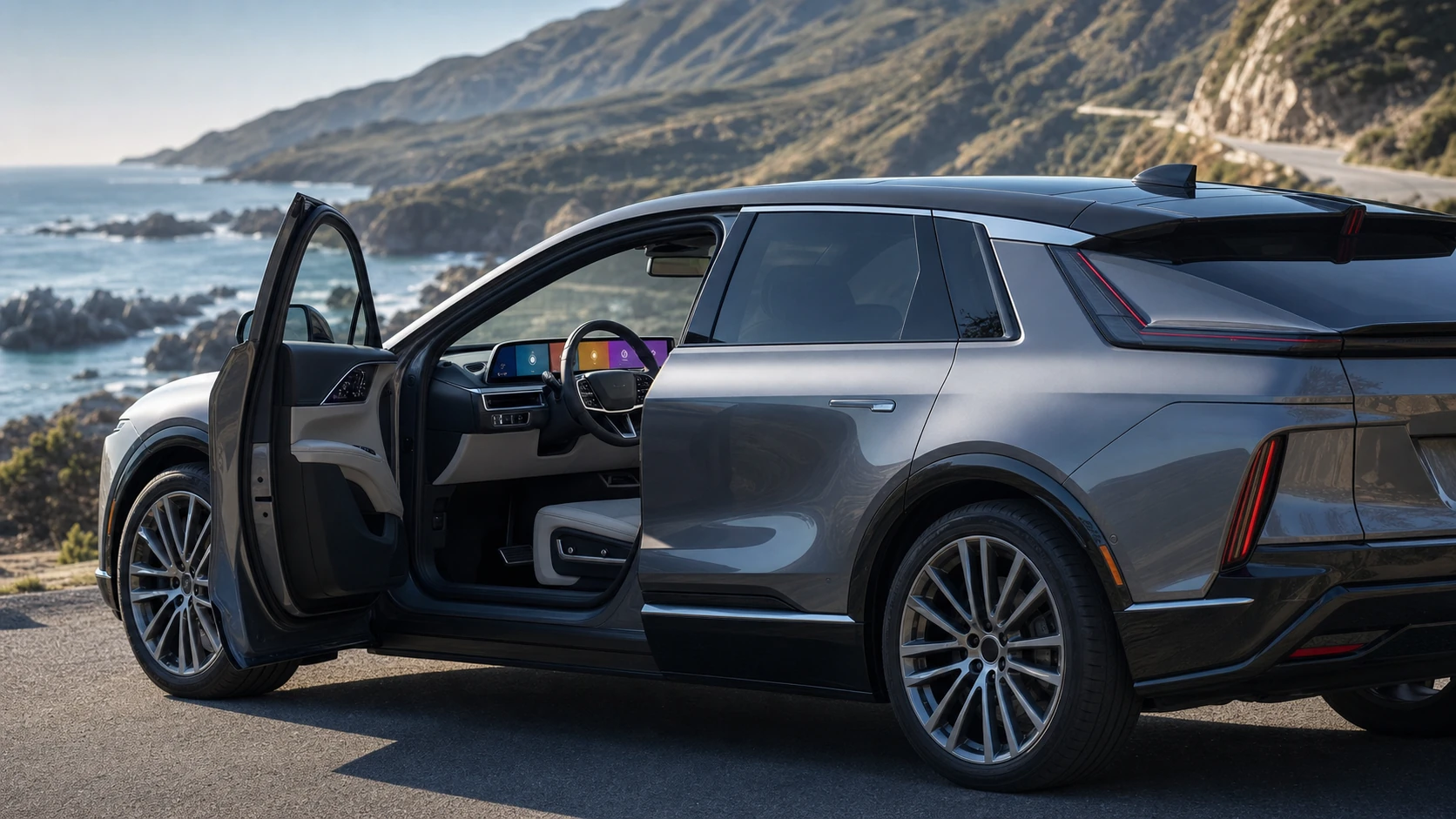
What changes is how easily the driver can request power. A sharper accelerator map can deliver stronger torque with less pedal movement, while a softer map makes gradual acceleration easier. Steering weight, suspension response and synthetic motor sound may also change, depending on the trim and equipment.
Those adjustments can influence consumption indirectly. If Sport mode leads to repeated rapid acceleration, the vehicle will use more energy per mile. If the driver maintains a steady speed and uses the accelerator gently, the difference between Sport and Tour may be small.
This is why Cadillac doesn’t publish one range figure for Tour, another for Sport and a third for Snow/Ice. The EPA rating applies to a particular vehicle configuration under a standardized test process, not to every selectable driving preference.
EPA Range, Dashboard Range and Actual Range Are Different
Understanding the LYRIQ’s range requires separating three measurements that owners often treat as interchangeable.
The first is EPA-estimated range. This is the standardized figure used to compare vehicles and configurations. For the 2026 model year, Cadillac lists up to 326 miles for the rear-wheel-drive LYRIQ and up to 319 miles for an all-wheel-drive version with the standard 11.5-kW onboard charging equipment. An AWD configuration with the available 19.2-kW onboard charging equipment is listed at 303 miles, while the performance-focused 2026 LYRIQ-V is rated at 285 miles.
Those differences reflect hardware, vehicle weight, powertrain design, equipment and the certified configuration. They aren’t caused by selecting Sport after the vehicle leaves the dealership.
The second measurement is the estimated range shown on the instrument display. This number is a forecast based on remaining charge, recent driving habits, ambient conditions, climate-control use and other factors. Cadillac’s owner information also identifies hard acceleration, hard braking, performance driving and battery preconditioning as influences on the displayed estimate.
The third measurement is actual range: the distance the vehicle travels before it must be charged. That result depends on average energy consumption. A LYRIQ averaging 3 miles per kilowatt-hour uses about 33.3 kWh over 100 miles, while one averaging 2.5 miles per kilowatt-hour needs about 40 kWh to cover the same distance.
A drive mode can influence that efficiency, but speed, weather, elevation, wind, tires, cabin heating and driving style often have a larger effect.
What Each LYRIQ Driving Mode Does to Efficiency
Tour Mode
Tour is the LYRIQ’s normal everyday setting. Cadillac calibrates it to provide a balance of comfort, smooth acceleration and predictable handling for city streets and highways.
For most drivers, Tour is the best baseline for controlling energy use. Its less aggressive pedal response can make it easier to accelerate gradually and maintain a stable speed. That can help reduce unnecessary power demands, especially in traffic.
Tour isn’t a dedicated economy mode, however. A driver can still use large amounts of energy by accelerating hard, traveling at high speed or running the cabin heater heavily in cold weather. The setting supports smooth driving, but it can’t overcome inefficient behavior.
On a long trip, Tour is usually the practical choice because it provides normal performance without encouraging the more urgent responses associated with Sport. Drivers who want the most dependable arrival estimate should combine Tour with moderate speeds and steady accelerator inputs.
Sport Mode
Sport changes the LYRIQ’s character by sharpening accelerator response and adjusting steering behavior. On vehicles with the required equipment, it may also alter suspension tuning, electric vehicle sound and certain driver-assistance responses.
Sport doesn’t carry a fixed range penalty. Selecting it while traveling at a constant speed doesn’t necessarily cause a dramatic jump in consumption because the energy needed to overcome aerodynamic drag and rolling resistance remains largely unchanged.
The difference becomes clearer during acceleration. Sport makes substantial torque available with less pedal movement, so it can encourage quicker starts, stronger passing maneuvers and more frequent changes in speed. Each burst of acceleration draws heavily from the battery, and repeated use can lower miles per kilowatt-hour.
A driver who uses Sport gently may achieve efficiency close to Tour. A driver who takes advantage of the sharper calibration will probably see the estimated range fall more quickly. The mode creates the opportunity to use more energy; it doesn’t force the driver to do so every second.
Snow/Ice Mode
Snow/Ice mode softens accelerator and torque response to help limit wheel slip on wet, icy or snow-covered roads. On equipped all-wheel-drive LYRIQs, it can also alter how the propulsion system and steering respond.
The softer pedal may encourage gentler starts, but Snow/Ice isn’t designed as an economy mode. Its main purpose is traction and control. Cadillac doesn’t claim that it adds a set number of miles or lowers battery consumption by a stated percentage.
Owners may still notice worse efficiency whenever they use it because the surrounding conditions are usually demanding. Cold batteries, cabin heating, snow, slush and winter tires can all increase energy use. Driving through standing water or deep snow also creates more resistance.
The road conditions usually explain more of the range loss than the mode itself. Snow/Ice should be selected whenever traction requires it, even if the vehicle is consuming more energy than it would on a warm, dry road.
My Mode
My Mode allows the driver to combine preferred settings rather than accepting one complete factory profile. Depending on equipment, the LYRIQ can offer choices for accelerator response, steering, brake feel, suspension and motor sound.
Because those combinations vary, My Mode has no single effect on efficiency. A configuration using Relaxed acceleration may make smooth starts easier and help a driver avoid unnecessary power demands. A configuration using Sport acceleration can produce the opposite result if the driver responds to its sharper feel.
Changes to steering weight or synthetic sound are unlikely to create a meaningful range difference by themselves. Accelerator behavior and vehicle speed remain much more important.
For drivers who want a calmer response but prefer heavier steering, My Mode can provide a useful compromise. It can support efficient driving, but it doesn’t unlock extra battery capacity.
Performance Modes and the Cadillac LYRIQ-V
Cadillac has expanded the LYRIQ’s performance options across recent model years. Some eligible 2024 vehicles could receive a paid Velocity upgrade that replaced the normal Sport setting with a mode offering additional propulsion torque.
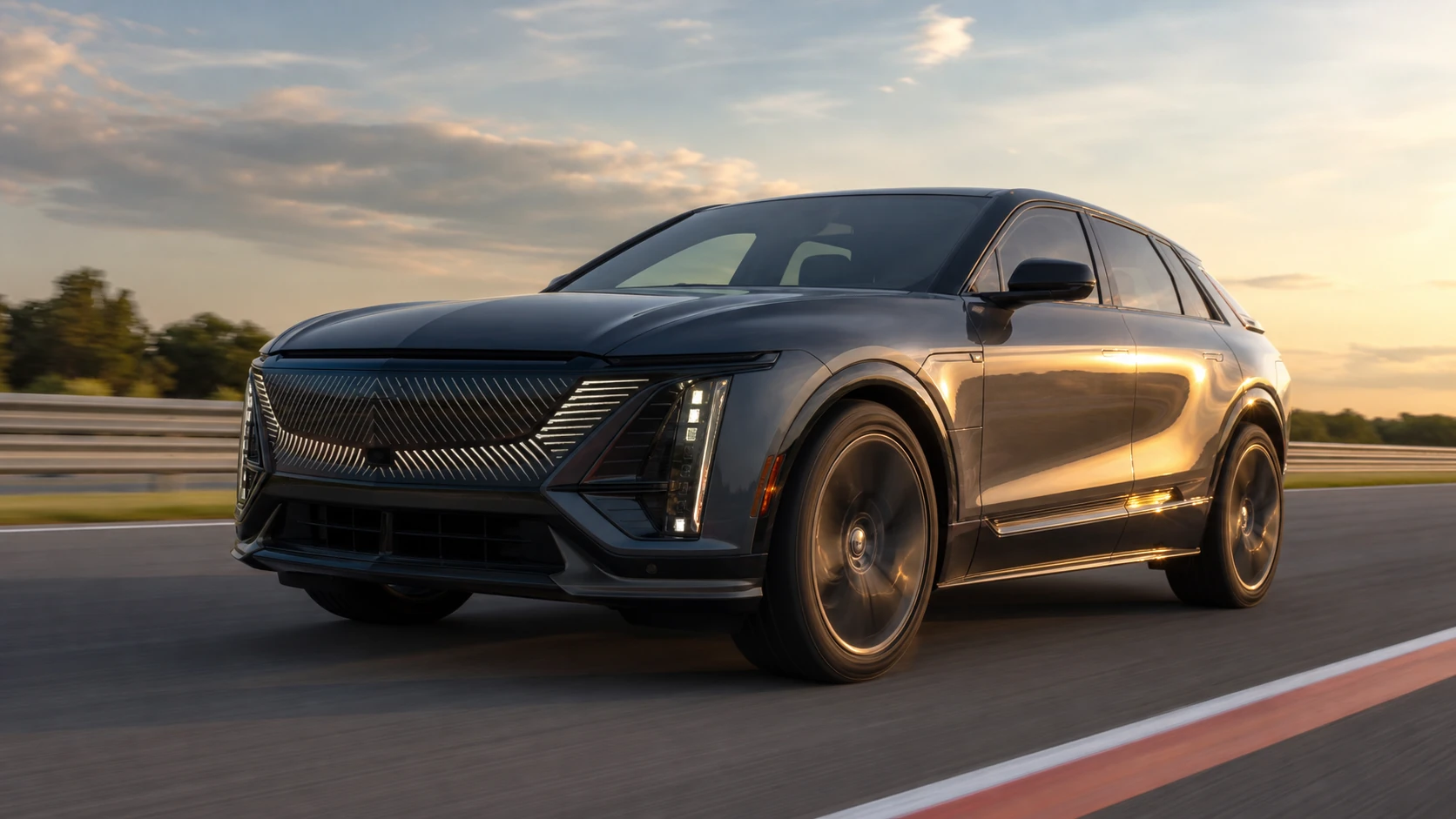
The larger change arrived with the 2026 Cadillac LYRIQ-V, the first electric model in Cadillac’s V-Series. It adds V-Mode, Competitive Mode, Launch Control and Velocity Max. Cadillac estimates output at 615 horsepower and 650 lb-ft of torque when Velocity Max is active, with a claimed zero-to-60-mph time of 3.3 seconds under suitable conditions.
V-Mode and Velocity Max aren’t the same thing. V-Mode stores a personalized group of performance settings, while Velocity Max unlocks the vehicle’s highest available output. Cadillac specifically warns that Velocity Max draws more battery energy than normal driving and that repeated use can deplete the battery faster.
That warning is more direct than the guidance attached to regular Sport mode. High-output acceleration demands a large amount of electrical power, and repeated launches can reduce the remaining range quickly. The energy cost comes from using the added performance, not merely from seeing the feature active on the screen.
The LYRIQ-V’s 285-mile EPA rating also shouldn’t be compared with a regular LYRIQ as though the mode selection alone creates the difference. The V model is a separate performance vehicle with its own motors, output, tires, chassis tuning and certified configuration.
The Factors That Matter More Than Drive Mode
Driving speed often has a larger effect on LYRIQ range than the difference between Tour and Sport. At highway speeds, the vehicle must push against increasing aerodynamic resistance. The faster it travels, the more continuous power it needs to maintain that speed.
A LYRIQ driven gently in Sport at a moderate speed may use less energy than one driven rapidly in Tour. The accelerator setting affects how the vehicle responds, but it can’t cancel the energy required to move a large electric SUV through the air.
Temperature is another major factor. In cold weather, energy may be needed to warm the battery and cabin. Heated seats generally require less power than heating the entire interior, so using seat heat with a moderate cabin temperature may help reduce consumption.
Preconditioning while the LYRIQ remains plugged in can also preserve battery energy. The vehicle can warm or cool the passenger compartment using power from the charging source rather than relying entirely on stored energy after departure.
Short winter trips may look especially inefficient because the initial heating demand is spread across only a few miles. Several brief journeys can use more energy than one continuous trip covering the same total distance.
Wind, elevation and road conditions also matter. A strong headwind or long climb can lower efficiency even if the vehicle remains in Tour. A return journey with a tailwind or downhill grade may produce much better results without any change in driving mode.
Tire pressure and tire type can influence consumption as well. Underinflated tires create additional rolling resistance, while some winter or performance tires may use more energy than tires designed with lower rolling resistance.
One-Pedal Driving Is Separate From the Driving Modes
One-Pedal Driving is often discussed alongside the LYRIQ’s drive modes, but it controls a different function. Tour, Sport, Snow/Ice and My Mode change how the vehicle responds. One-Pedal Driving changes how strongly the vehicle slows when the driver releases the accelerator.
The LYRIQ offers Off, Normal and High settings. Normal produces moderate deceleration, while High slows the vehicle more strongly. During that slowing, regenerative braking can convert part of the vehicle’s motion back into electrical energy and return it to the battery.
This can improve efficiency in stop-and-go traffic because the vehicle recovers energy that would otherwise be lost as heat through the friction brakes. Regen on Demand, operated through the steering-wheel paddle, can provide a similar benefit during deceleration.
Regeneration isn’t perfectly efficient. The vehicle can’t recover all the energy used to accelerate because losses occur in the motors, electronics and battery. Avoiding unnecessary acceleration is still better than accelerating hard and trying to recover the energy moments later.
One-Pedal Driving also offers little benefit during a long period of steady highway travel because the vehicle isn’t slowing often. Its value is greatest on routes with frequent stops, traffic lights or descending sections.
Drivers should also follow Cadillac’s safety guidance in slippery conditions. The owner’s manual advises turning off One-Pedal Driving on wet, snowy or icy roads because strong lift-off deceleration may not be appropriate when traction is limited.
Why the Dashboard Estimate Changes After a Mode Switch
A changing estimated-range number doesn’t always mean the vehicle has just consumed a large amount of energy. The display predicts future travel based on current charge and expected consumption.
If the driver selects Sport, the system may account for the possibility of higher power use. It may also adjust after observing faster acceleration or higher speed. The displayed number can fall even though the battery percentage has barely moved.
The estimate can rise after several efficient local trips for the same reason. The vehicle sees recent low consumption and predicts that the remaining charge may last longer. That doesn’t mean the battery has grown or that the LYRIQ will necessarily achieve the same result on a fast motorway journey.
Climate-control changes can produce similar movements. Turning on strong cabin heating may lower the projected range, while reducing the temperature setting can cause the estimate to recover. The system is revising its calculation rather than measuring new battery capacity.
Drivers should consider battery percentage, recent miles-per-kilowatt-hour figures and the navigation system’s predicted arrival charge together. Any single estimate can change as conditions change.
How to Compare LYRIQ Modes Fairly
Owners who want to measure the difference between Tour and Sport should avoid relying only on the range display. A fair test should compare actual energy used over the same route.
The starting state of charge, outside temperature and battery temperature should be similar. Climate settings, traffic conditions and average speed should also remain as consistent as possible. Testing Tour on a calm morning and Sport during a windy evening commute won’t produce a useful comparison.
The LYRIQ’s energy screens can show recent efficiency, total energy consumed, climate use and energy recovered through regeneration. Miles per kilowatt-hour is usually the clearest figure for comparing two drives.
Repeating the route several times produces a better result than relying on one journey. Traffic lights, congestion and wind can distort a single test. Alternating the order of the modes can also reduce the effect of changing battery or road temperatures.
Many drivers will find that the gap remains small when acceleration and speed are carefully matched. The difference may become larger during normal driving because Sport changes how naturally the driver applies the accelerator.
Common Misunderstandings About LYRIQ Range
One common belief is that Sport mode immediately removes miles from the battery. It doesn’t. The display may revise its forecast, but actual stored energy changes only as the vehicle uses electricity.
Another misunderstanding is that Snow/Ice acts as an economy setting because it softens acceleration. That response is intended to reduce wheel slip. Winter heating, cold batteries and difficult road surfaces usually have a greater effect on consumption.
Some owners also assume that the highest One-Pedal Driving setting always provides the longest range. Strong regeneration can recover more energy during slowing, but steady driving without repeated speed changes is often more efficient.
A falling range estimate is sometimes treated as evidence of battery deterioration. Short-term changes are more commonly linked to speed, temperature, climate use or recent driving. Battery health can’t be judged reliably from a few changes in the projected-mile display.
It’s also easy to confuse hardware differences with mode differences. Rear-wheel-drive, all-wheel-drive and V-Series LYRIQs have different certified ranges because they are different vehicle configurations. Selecting a menu setting doesn’t turn one configuration into another.
Frequently Asked Questions
Does Sport mode reduce Cadillac LYRIQ range?
Sport can reduce real-world range if its sharper accelerator response leads to faster or more frequent acceleration. There is no fixed percentage loss, and a gently driven LYRIQ may show only a small difference from Tour.
Is Tour the most efficient LYRIQ driving mode?
Tour is usually the best setting for predictable everyday efficiency because it supports smooth, gradual responses. Cadillac doesn’t advertise it as a dedicated Eco mode or guarantee a specific range gain.
Does Snow/Ice mode use more battery?
Snow/Ice mode has no stated battery-use penalty. The cold temperatures, cabin heating, snow and added rolling resistance that accompany winter driving are usually the larger reasons for reduced range.
Can My Mode increase the LYRIQ’s range?
My Mode can be configured with Relaxed acceleration, which may help some drivers use power more gently. It doesn’t add battery capacity or carry its own official range rating.
Does One-Pedal Driving save battery?
One-Pedal Driving can recover energy during slowing, especially in urban traffic. It won’t recover all the energy used during acceleration, so smooth speed control remains more effective than repeated acceleration and braking.
Why does the estimated range fall after selecting Sport?
The LYRIQ’s displayed range is a prediction based on recent and expected consumption. Selecting a performance setting or driving more aggressively can cause the system to forecast higher energy use without an immediate large change in battery percentage.
Does Velocity Max use more battery than normal driving?
Yes. Cadillac states that Velocity Max draws more battery energy, and repeated use can deplete the battery faster. The effect becomes most visible when the driver uses the added output for rapid acceleration.
Conclusion
Cadillac LYRIQ driving modes can produce different real-world battery usage, but they don’t come with separate guaranteed range figures. Their effect depends on how each setting changes vehicle response and how the driver reacts to that change.
Tour is the strongest default for drivers who want calm, predictable consumption. Sport and My Mode can still be efficient when used gently, while Snow/Ice should be chosen for safety rather than energy savings. Velocity Max is the clearest high-consumption setting because it unlocks extra output and carries a direct warning about faster battery depletion.
Speed, weather, cabin heating and acceleration habits will usually move the range figure more than the choice between ordinary modes. A smooth LYRIQ in Sport can outperform an aggressively driven one in Tour.
The best way to understand a particular vehicle is to watch actual miles per kilowatt-hour across familiar routes. That measurement shows what the battery is really doing, while the driving-mode label explains only part of the story.
