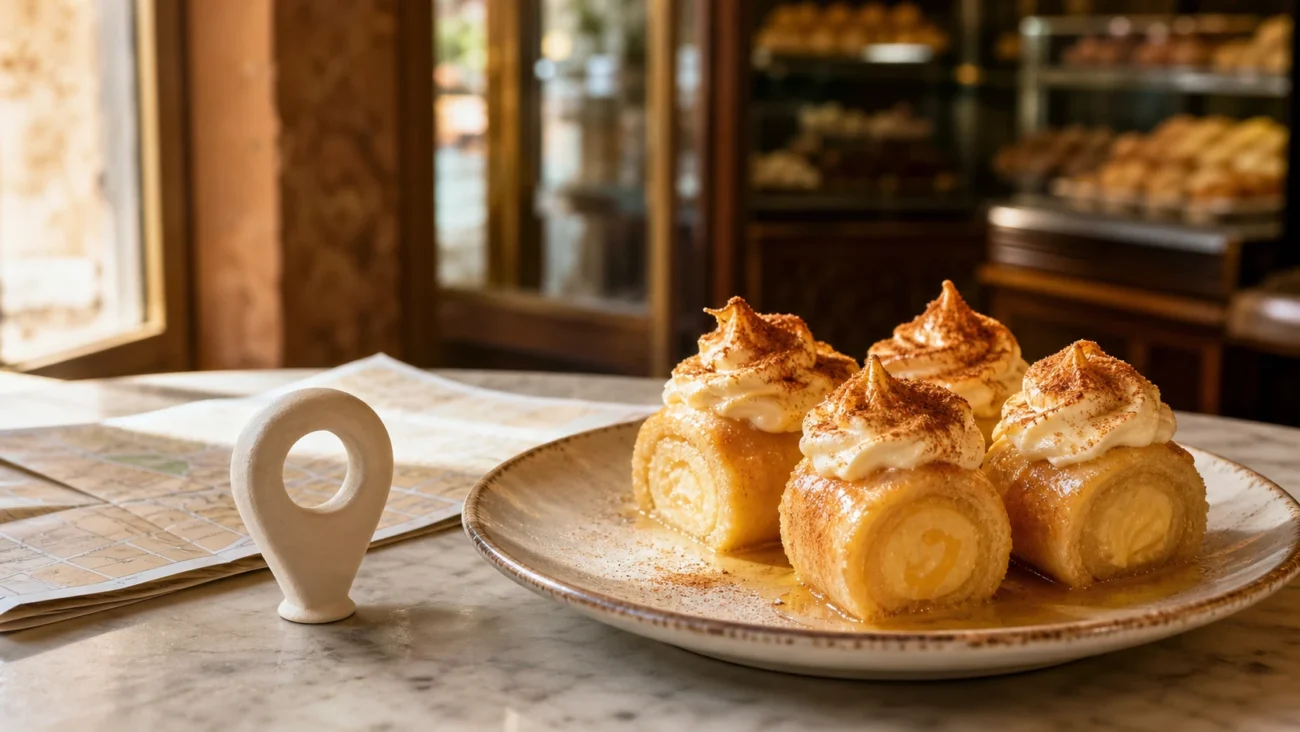
The best answer to “best piononos de Santa Fe near me” depends on where you are staying and how far you are willing to travel. For the strongest connection to the pastry’s history, start with Casa Ysla in Santa Fe, the Granada town where pastry chef Ceferino Isla González created the modern pionono in 1897. Casa Ysla’s Calle Real shop is the most fitting choice for visitors who want the original setting, while its larger A-92G location is easier for drivers.
Travelers staying in central Granada don’t need to make a separate trip to Santa Fe to try a respected version. Casa Ysla has several branches in Granada, including locations at Plaza de Bib-Rambla, Reyes Católicos, Avenida de la Constitución, Carrera de la Virgen, and Acera del Darro. Rey Fernando offers a credible alternative with traditional and flavored versions, while Mercedes Isla is especially useful for customers looking for clearly listed gluten-free or lactose-free choices.
The closest bakery isn’t always the best one. Freshness, daily turnover, storage, recipe balance, and the difference between a true Santa Fe pionono and another dessert with the same name all matter. A careful choice can mean the difference between a moist, cinnamon-scented pastry with a lightly caramelized top and a dry, overly sweet roll that gives little sense of why the dessert became a Granada specialty.
What a Pionono de Santa Fe Actually Is
A traditional pionono de Santa Fe is a small upright pastry made from a thin sheet of sponge cake. The sponge is moistened with syrup, spread with cream and cinnamon, rolled into a tight cylinder, and topped with a crown of sweet cream. The upper layer is then caramelized, creating a lightly toasted finish that offsets some of the sweetness.
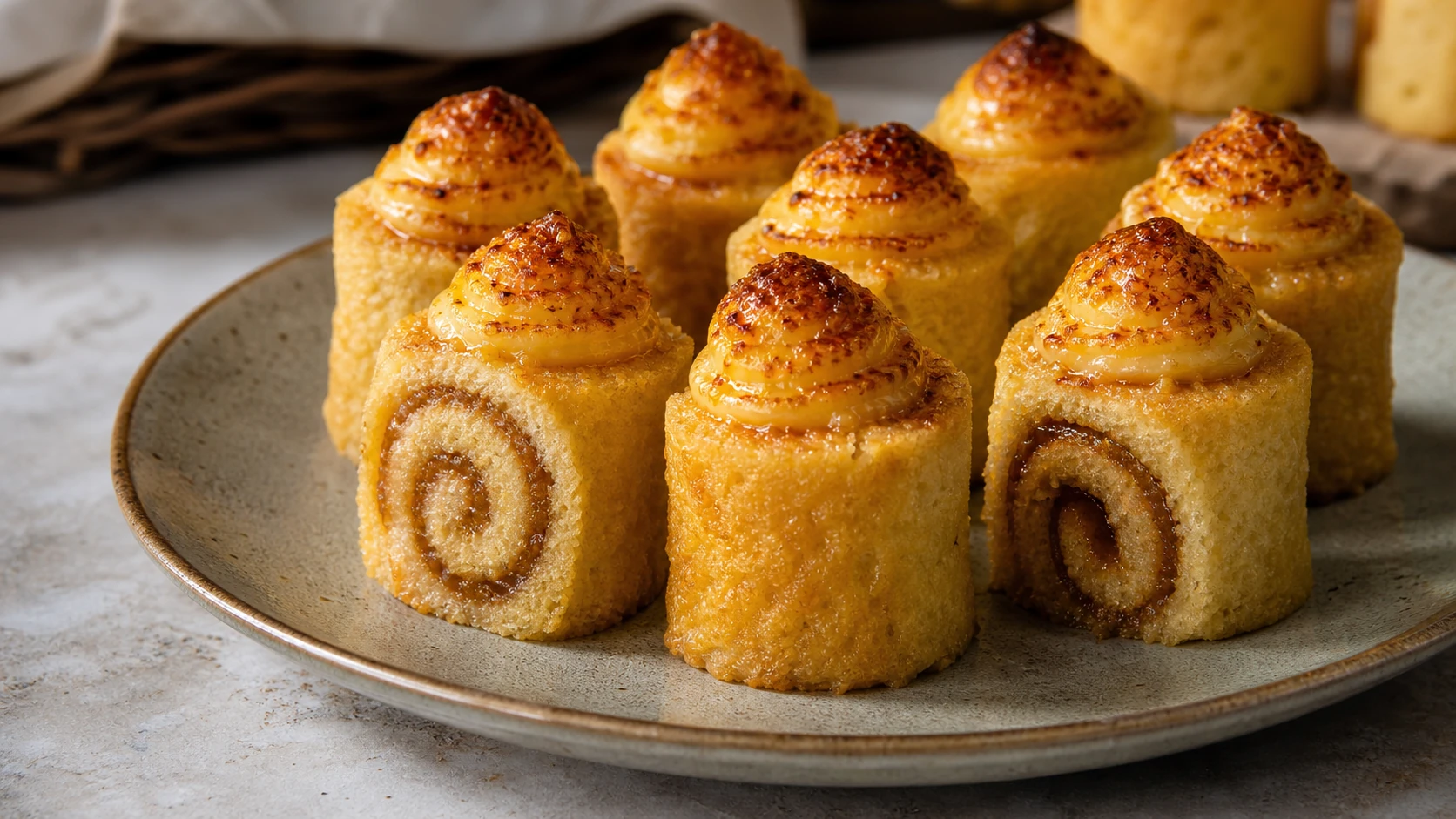
Its size is part of the experience. A pionono is usually small enough to eat in one or two bites, though eating it slowly makes its structure easier to appreciate. The first impression should be soft sponge and syrup, followed by cream, cinnamon, and a faint caramel bitterness from the browned top.
The pastry is associated with Santa Fe, a town around 11 kilometers west of Granada. Ceferino Isla González opened an artisan bakery on Calle Real in 1897 and is widely credited with creating the version now identified with the town. His business later became Casa Ysla, which remains the producer most closely connected with the pastry’s origin story.
The name is commonly linked to Pope Pius IX, known in Italian as Pio Nono. The rolled sponge was said to suggest the pope’s body, the paper wrapper resembled his white clothing, and the cream crown represented the papal skullcap. That explanation has become part of the pastry’s identity, though most customers are now more interested in flavor and freshness than the visual reference.
There is a common source of confusion. “Pionono” can refer to other foods in Latin America and elsewhere, including large rolled cakes, dulce de leche-filled desserts, and savory plantain dishes. A Santa Fe pionono is specifically the small Spanish pastry with syrup-soaked sponge, cinnamon, cream, and a caramelized top.
Where to Find the Best Piononos in Santa Fe
Casa Ysla on Calle Real
Casa Ysla at Calle Real 10 is the most natural first stop for anyone visiting Santa Fe for its famous pastry. The business began on Calle Real, and the present location keeps the brand connected to the center of the town where the pionono was created. It is the best option for visitors who want history, a walk through Santa Fe, and the chance to eat the pastry close to its place of origin.
The value of this branch is not limited to the product itself. Eating a pionono in Santa Fe gives context to a dessert that is often treated simply as a Granada souvenir. The town has its own historic identity, and the pastry forms part of its local culture rather than existing only for tourists.
This location is most suitable for pedestrians, public-transport users, and travelers who want to compare more than one local producer. Calle Real is also home to other pastry businesses, making it possible to buy a small quantity from different shops and judge the differences while the products are fresh.
Casa Ysla on the A-92G
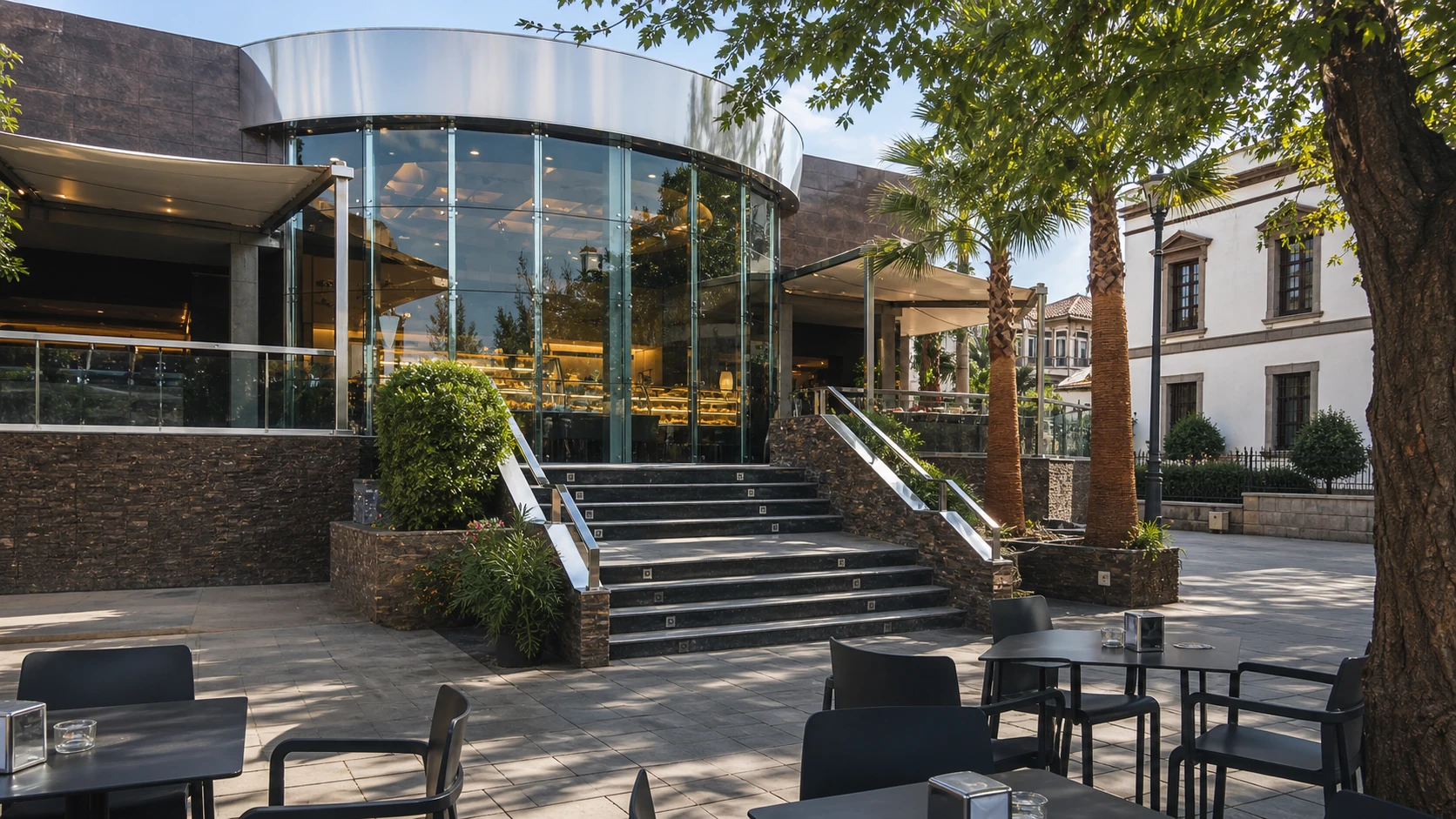
Casa Ysla’s larger location on the A-92G at kilometer 3.3 is the better choice for drivers. It offers easier road access than the town-center branch and is closely connected with the company’s main production operation. Families, tour groups, and travelers buying several boxes may find this location more practical.
The site has a larger café setting, so it works well for breakfast, coffee, or a planned stop rather than a quick purchase from a compact counter. It also gives visitors a clearer sense of the scale Casa Ysla has reached since its beginnings as a small bakery in 1897.
The tradeoff is atmosphere. A road-accessible café doesn’t offer the same historic setting as Calle Real, and busy travel periods can bring queues or crowded tables. The quality of the pastry should be the main reason to stop here, while the town-center branch is better for visitors who care equally about place and tradition.
Rey Fernando in Santa Fe
Rey Fernando operates a shop at Calle Real 31 in Santa Fe and is one of the strongest alternatives to Casa Ysla. It sells the classic version as well as flavored options, including chocolate varieties and mixed boxes. Its broad selection makes it useful for groups whose members don’t all want the same style.
For a fair tasting, begin with Rey Fernando’s traditional pionono before moving to flavored versions. Chocolate or fruit can change the character of the pastry enough that it becomes difficult to compare it with the classic Santa Fe formula. The traditional version shows how the bakery handles sponge, syrup, cinnamon, cream, and caramelization.
Rey Fernando has also been associated with long daily opening hours, making it a practical choice for visitors arriving later in the evening. Hours can change on holidays or during special periods, so checking the current schedule before a dedicated trip remains sensible.
Obrador Robles
Obrador Robles is another producer linked with Santa Fe’s pionono tradition. It has built a substantial operation rather than making the pastry as a minor sideline. In 2025, owner Javier Robles said the bakery was producing around 12,000 piononos per week.
Robles has described syrup preparation, cinnamon, and an anise-like note as areas where one bakery’s recipe can differ from another. That helps explain why tasting more than one producer is worthwhile even though the pastries share the same basic structure.
Public location information for Obrador Robles has not always been as clear or consistent as information for Casa Ysla or Rey Fernando. Anyone planning a special trip should confirm the current shop or collection point directly rather than relying on an old listing.
Best Piononos in Central Granada
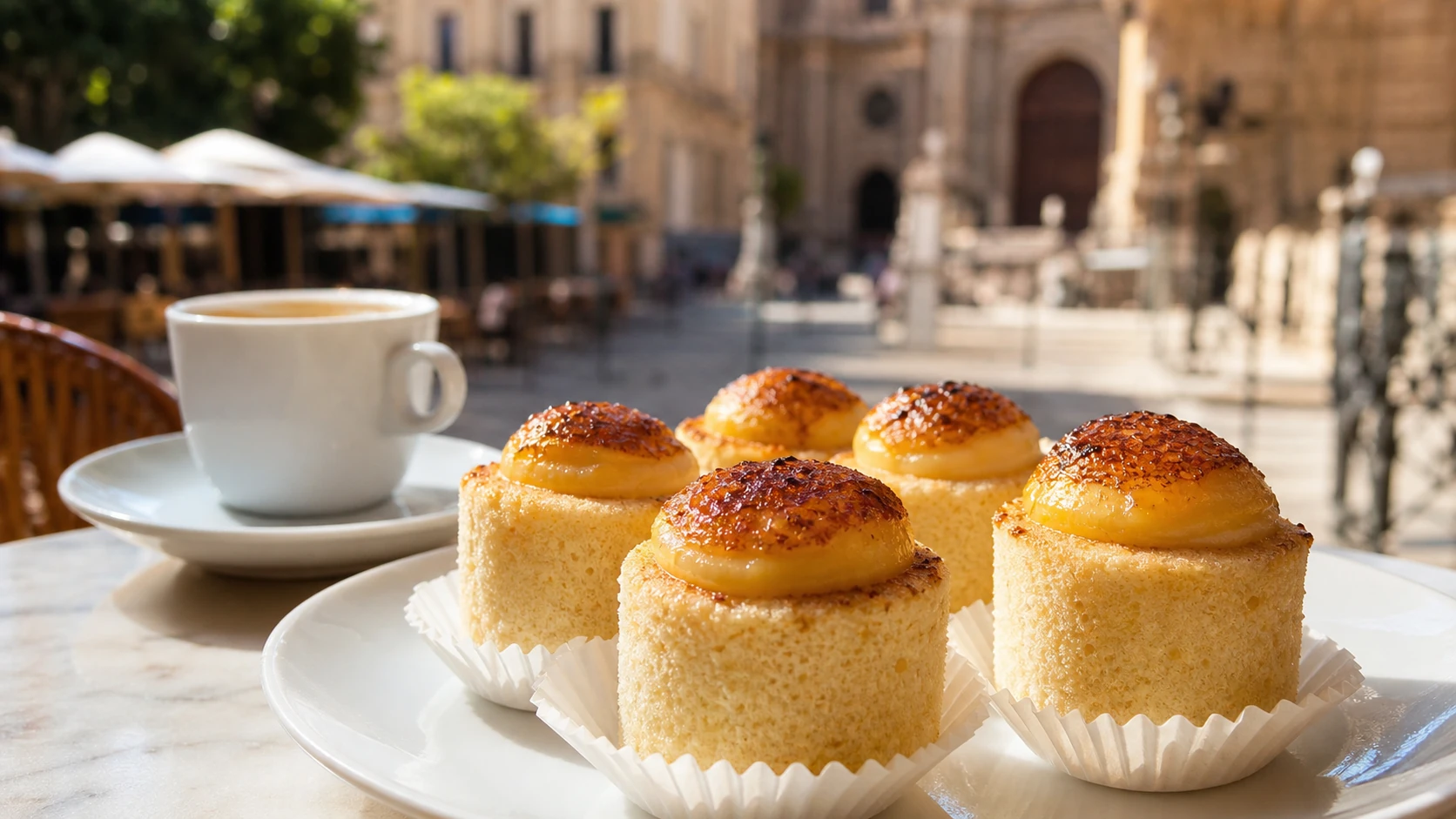
A trip to Santa Fe offers the deepest historical connection, but it is not necessary for every visitor. Casa Ysla distributes its pastries to several of its own Granada branches, allowing travelers to try the established recipe without leaving the city. For many people, the best pionono “near me” will simply be the branch closest to their hotel or sightseeing route.
Best Piononos in Central Granada
 The Casa Ysla shop at Plaza de Bib-Rambla 22 is among the most convenient choices for tourists. It sits near Granada Cathedral, the Alcaicería, and some of the busiest streets in the historic center. Visitors can stop for coffee and one pastry or buy a box shortly before returning to their accommodation.
Casa Ysla at Reyes Católicos 57 is another practical central branch. The street links several important parts of the city and is easy to reach from Plaza Nueva, the cathedral area, and nearby shopping districts. Rey Fernando also has a branch on Reyes Católicos, at number 28, so visitors can compare two producers without traveling far.
The Avenida de la Constitución 3 branch may be more convenient for travelers arriving through Granada’s railway station or staying north of the cathedral district. Casa Ysla also operates at Carrera de la Virgen 27 and Acera del Darro 62, giving customers several options around central Granada.
A city branch may be just as satisfying as a Santa Fe branch when the pastries have arrived recently and are stored correctly. The main reason to travel to Santa Fe is the setting and the opportunity to compare local bakeries, not a certainty that every pionono there will be fresher than every pionono sold in Granada.
Mercedes Isla, at Calle Gabriel García Márquez 2, is a strong choice for customers with dietary restrictions. Its published menu has included gluten-free piononos as well as gluten-free and lactose-free formats in boxes of six and twelve. The bakery has also offered a wider range of gluten-free pastries.
Customers with celiac disease or a serious allergy should still ask about preparation areas, utensils, storage, and possible contact with allergens. A product being listed as gluten-free does not automatically answer every question about handling. Clear communication with the bakery matters more than relying only on a menu label.
How to Judge Whether a Pionono Is Good
The sponge should be thin, flexible, and evenly rolled. It needs enough structure to hold its shape, but it shouldn’t feel firm or dry. A good sponge absorbs syrup without becoming soggy or falling apart.
Moisture is one of the clearest quality tests. A traditional pionono should taste juicy, but syrup should not pool in the wrapper or overpower every other ingredient. A dry pastry may have been stored too long, while an excessively wet one can feel heavy and poorly balanced.
The cream inside the roll should form a thin, even layer rather than a thick filling. Cinnamon should be noticeable but controlled. Too much spice can turn bitter, while too little makes the pastry taste like a generic sweet sponge.
The top should carry a distinct caramelized surface. That browned layer adds a slight bitterness and a firmer texture before the soft cream underneath. If the top is pale and completely soft, the pastry loses one of its defining contrasts.
Freshness can change all of these qualities. A pionono that was excellent when made may become less appealing after long refrigeration, poor packaging, or several hours in a warm bag. Buying from a busy bakery with regular turnover usually gives you a better chance of receiving a fresh product.
Appearance can offer clues, but it should not determine the verdict. A neat cylinder, visible spiral, centered cream crown, and evenly browned top suggest careful work. Still, a slightly uneven handmade pionono may taste better than a visually perfect one produced and stored without enough attention to texture.
Prices, Box Sizes, and Delivery
Recent delivery listings placed a box of six traditional piononos at roughly €10.50 to €12, depending on the bakery. Boxes of twelve generally appeared in the range of about €17 to €20. These figures can change, and counter prices may differ from delivery-platform prices.
Casa Ysla’s delivery listings have shown six-piece boxes at about €11 and twelve-piece boxes at about €19. Rey Fernando has listed six traditional piononos for around €10.50 and twelve for around €17, while a two-piece box was available for customers who wanted a smaller tasting. Mercedes Isla’s listings placed six pieces at around €12 and twelve at around €20.
A box of six is usually suitable for two to four people, depending on whether the piononos are the main dessert or part of a larger tasting. Twelve pieces make more sense for a family gathering, an office, or a comparison between several flavors. Because the pastries are rich, buying a large quantity before knowing whether you enjoy the syrup-heavy style can be wasteful.
Delivery can help travelers dealing with poor weather, mobility limits, children, or a crowded itinerary. Casa Ysla, Rey Fernando, and Mercedes Isla have appeared on delivery services in Granada, though coverage depends on the customer’s address. Platform fees, minimum orders, and service charges can make a small order much more expensive than the listed pastry price.
A hotel delivery should be timed close to when the pastries will be eaten. Reception policies vary, and some hotels will not accept food orders without the guest present. Giving a working telephone number and clear room or lobby instructions reduces the risk of delay.
Delivery is convenient but may not show the pastry at its best. Movement can damage the cream crown, while travel time may soften the caramelized top. A first tasting is usually better at the bakery, where storage and transport have had less time to affect the texture.
Shipping outside Granada creates another difference. Some piononos sold elsewhere in Spain may have been frozen or packed for longer transport. A carefully handled distributed product can still be enjoyable, but it will not always reproduce the experience of eating a same-day pastry at a Santa Fe or Granada café.
Common Misunderstandings and Buying Mistakes
The biggest misunderstanding is assuming every food called a pionono is the Santa Fe pastry. In some countries, the word refers to a large horizontal cake roll. In Puerto Rico, it can describe a savory dish made with sweet plantain and meat. Checking the photograph and ingredient description prevents the wrong order.
A Santa Fe pionono should appear as a small upright cylinder with a cream crown and a browned top. The description should mention sponge cake, syrup, cinnamon, cream, custard, or caramelization. A large roll filled with dulce de leche may be delicious, but it belongs to a different tradition.
Another mistake is choosing only by distance. A nearby restaurant may serve piononos supplied several days earlier, while a bakery slightly farther away may receive or make them daily. Ask who produces the pastry and how frequently fresh batches arrive.
Some customers also assume that Casa Ysla’s historical claim means every competing product is an imitation with no value. Casa Ysla has the clearest connection to Ceferino Isla and the 1897 creation, but other Santa Fe and Granada bakers have built their own established versions. Personal preference may favor a lighter syrup, a stronger cinnamon flavor, or a different cream texture.
Starting with a flavored pionono can also create the wrong impression. Chocolate, coffee, citrus, or fruit versions may be appealing, but they can hide the characteristics that define the traditional pastry. Try the classic version first, then decide whether modern variations improve it for your taste.
Timing matters during warm weather. Buying a cream-filled box at the start of a long sightseeing day risks damaged toppings and poor texture. Purchase near a planned coffee break, hotel return, evening meal, or car journey where the pastries can be kept stable.
Frequently Asked Questions
Where can I find the best piononos near Granada Cathedral?
Casa Ysla at Plaza de Bib-Rambla 22 is one of the closest and most convenient options. Casa Ysla at Reyes Católicos 57 and Rey Fernando at Reyes Católicos 28 are also within the central tourist area and make an easy comparison possible.
Is Casa Ysla the original creator of the Santa Fe pionono?
Casa Ysla traces the pastry to its founder, Ceferino Isla González, who opened a bakery on Calle Real in Santa Fe in 1897. He is widely credited with creating the modern pionono de Santa Fe, making Casa Ysla the strongest historical starting point.
Is it worth traveling from Granada to Santa Fe just for piononos?
It is worthwhile for visitors interested in food history, local atmosphere, and comparing several producers. Travelers with limited time can still get a strong version from Casa Ysla’s Granada branches without making the 11-kilometer trip.
How much should a box of piononos cost?
Recent delivery prices have generally ranged from about €10.50 to €12 for six and €17 to €20 for twelve. Counter prices may differ, and delivery fees, packaging, promotions, and flavored varieties can change the total.
Are gluten-free piononos available in Granada?
Mercedes Isla has publicly listed gluten-free piononos and gluten-free or lactose-free box options. People with celiac disease or serious allergies should ask about preparation methods and possible allergen contact before ordering.
How long do piononos stay fresh?
They are best eaten as soon as practical after purchase. Syrup helps keep the sponge moist, but extended refrigeration, heat, and poor packaging can affect the cream, caramelized top, and overall texture.
Can I buy authentic piononos outside Spain?
Some Spanish bakeries and specialty retailers distribute piononos beyond Granada, including frozen or travel-packed products. Search specifically for “piononos de Santa Fe” or “Granada-style piononos” and check that the product is a small upright sponge roll with syrup, cinnamon, cream, and a toasted top.
Conclusion
For the closest link to the pastry’s origin, Casa Ysla in Santa Fe remains the clearest first choice. Calle Real offers the historic setting, while the larger A-92G location suits drivers and groups buying several boxes.
Central Granada provides easier options without sacrificing access to the established Casa Ysla recipe. Plaza de Bib-Rambla and Reyes Católicos are especially practical for visitors, while Rey Fernando gives customers a nearby alternative with smaller boxes, flavored varieties, and broad opening hours.
Mercedes Isla deserves attention for its clearly advertised dietary options, and Obrador Robles offers another serious local interpretation for visitors who want to compare recipes. No single producer will suit every preference, since syrup level, cinnamon, cream texture, and caramelization vary.
Start with one classic pionono, eat it fresh, and judge the balance rather than the brand name alone. The best pionono near you is the one that still tastes like Santa Fe: soft sponge, measured syrup, warm spice, smooth cream, and a properly toasted crown.
