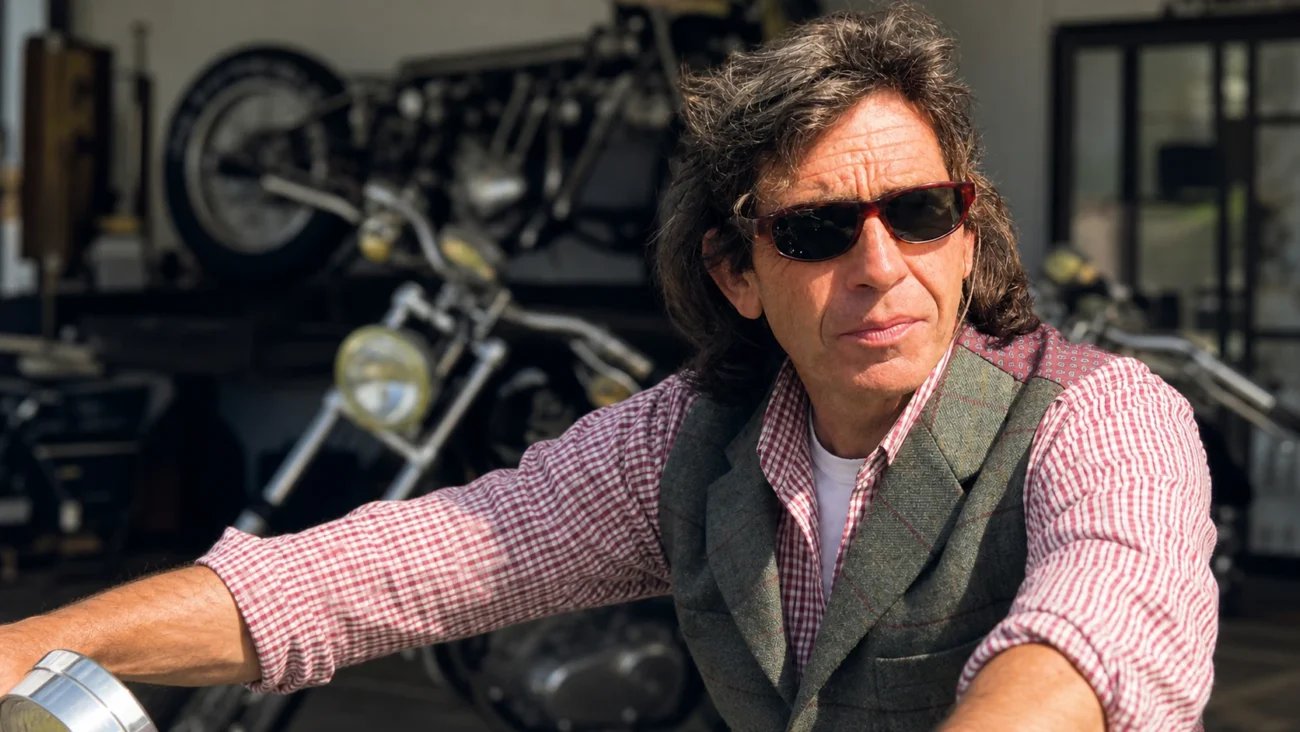
Guy Willison is a British motorcycle designer, engineer, builder and television personality whose career has been shaped by practical experience rather than celebrity. Known to viewers by the nickname “Skid,” he has spent decades riding, repairing and redesigning motorcycles, first as a London dispatch rider and later as the creator of limited-edition machines for Norton and Honda.
His work reaches beyond television. Willison founded 5Four Motorcycles, designed the Norton Commando 961 Street and created special versions of the Honda CB1100RS, CB1000R and CB1000 Hornet SP. He is also closely associated with presenter Henry Cole, appearing in programmes including The Motorbike Show, Shed & Buried, Find It, Fix It, Flog It and Junk & Disorderly.
Public information about Willison is concentrated on his motorcycles and professional history. His birth month and year can be established through company records, but his exact birthday, birthplace, marriage, children and personal finances have not been publicly confirmed. His biography is therefore best understood through the machines he has built, the miles he has ridden and the lasting working relationships he has formed.
Early Life and Interest in Motorcycles
Guy Willison was born in October 1962. He is 63 years old as of August 2026 and will turn 64 in October. His exact day of birth and birthplace have not been disclosed in a dependable public biography.
Motorcycles attracted him from childhood. Willison has recalled saving his pocket money to buy publications such as Bike and SuperBike, studying the machines as both objects of freedom and pieces of engineering. His interest was not limited to appearance or speed; he wanted to understand what happened inside an engine.
At about 11 years old, he obtained a Honda 50 engine from a breaker’s yard and cut it into sections using simple hand tools. He had seen a sectioned Vincent engine in a museum and wanted to create something similar for himself. The project showed an early willingness to take machinery apart simply to learn how its components worked together.
By his mid-teens, Willison was building rough field bikes from unwanted motorcycles and parts found in local garages. He has mentioned BSA Bantams and a Motobecane moped among the machines he and his friends used. These early experiments taught him that a motorcycle did not have to remain exactly as its manufacturer intended.
His first owned motorcycle was a used Gilera 50 Enduro. After damaging its engine, he bought a new blue Yamaha FS1E and passed his test on it so that he could legally carry a passenger. He later borrowed a Yamaha RD200 for his full motorcycle test and bought a Honda 550 Four K3 soon after turning 17.
London Dispatch Riding and the Origin of 5Four
Willison moved to London at 18 and began working as a motorcycle dispatch rider. The job placed extreme demands on both rider and machine, requiring long hours in traffic and all weather conditions. He has said that he covered approximately 125,000 miles during his first year and eventually accumulated more than one million miles as a courier.
Dispatch riding gave him a form of mechanical education that no classroom could fully reproduce. A motorcycle used for work had to start reliably, handle heavy mileage and remain manageable in crowded streets. Poor controls, uncomfortable seating or weak components became daily problems rather than minor design complaints.
Willison’s dispatch call sign was “5Four.” Decades later, he used that name for his motorcycle company, linking his current work directly to the years when a bike was both his transport and livelihood. The company name carries personal history rather than functioning as a slogan created for marketing.
His courier motorcycles were often stripped-down street machines. Willison spent money on changes that improved their function or appearance, avoiding accessories that served no clear purpose. That preference remains central to his later designs, which typically remove bulky factory parts and replace them with lighter, cleaner components.
Engineering Training and Workshop Experience
Willison studied motorcycle engineering at Merton Technical College. His professional education strengthened the knowledge he had already gained through riding and rebuilding bikes. Rather than moving immediately into custom design, he worked across several areas of the motorcycle trade.
He returned to dispatch riding and later operated a workshop beneath a railway arch in Hammersmith. Much of the work involved servicing motorcycles used by other London couriers. These customers needed fast, affordable repairs that could survive another day of demanding commercial use.
Willison also worked at a Honda dealership in Ruislip. That position gave him experience with factory servicing procedures, production motorcycles and manufacturer-supported parts. His connection with Honda would become much more visible years later when he created official limited-edition models for the company.
He later joined a business in Banbury that imported motorcycles from the United States. His responsibilities included tuning and redesigning the machines, allowing him to move beyond routine maintenance into more individual engineering work. By this stage, his career combined practical repair skills with a developing design identity.
Work in Sound Recording
Motorcycles did not provide Willison’s only career. He also trained as a sound recordist after working with Henry Cole, his long-term friend and future television collaborator. He eventually became freelance and worked in the music business while continuing to build motorcycles privately.
A full list of the bands, recordings or tours on which Willison worked has not been reliably published. His own professional history confirms that sound recording occupied a substantial period of his life, but he has not promoted that part of his career through detailed credits or personal stories.
The move into sound work did not end his interest in engineering. He continued modifying and constructing motorcycles away from the public eye. That long period helps explain why he appeared fully formed as a skilled builder when television audiences later became familiar with him.
Friendship and Work with Henry Cole
Guy Willison’s friendship with Henry Cole is one of the defining relationships of his professional life. Cole became known as a television presenter, producer and motorcycle enthusiast, while Willison developed a reputation as a builder with strong technical judgment. Their friendship existed long before their best-known television work.
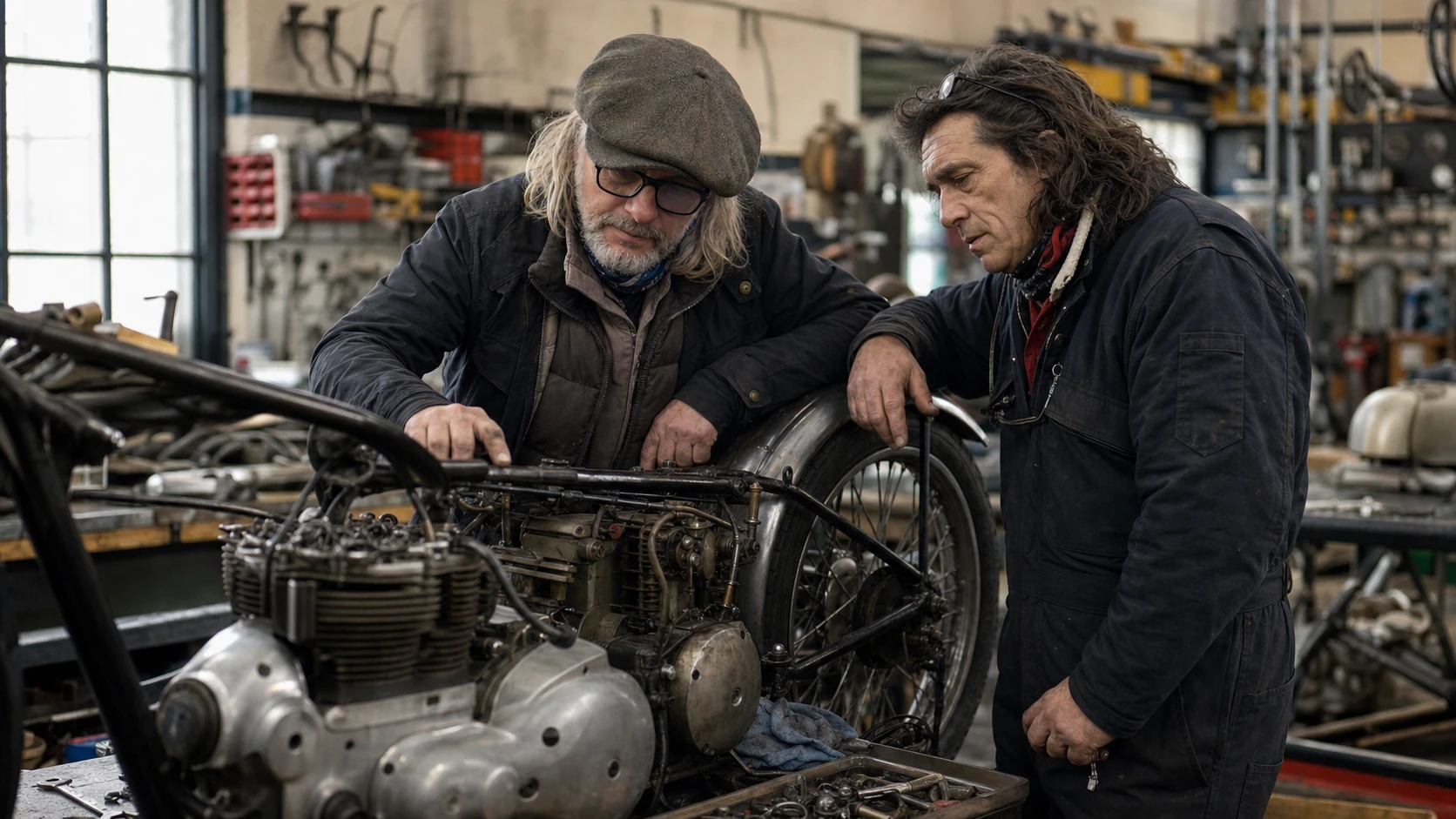
The two men are sometimes assumed to be brothers because of their relaxed on-screen relationship. They are not known to be related. They are lifelong friends and collaborators whose shared history includes sound recording, motorcycle production, television and speed-record projects.
Their different personalities have helped their programmes succeed. Cole often leads the search for neglected motorcycles, unusual vehicles and forgotten machinery. Willison usually assesses what has been found, identifies mechanical risks and decides whether a purchase can be repaired without consuming more money than it is worth.
Willison does not behave like a presenter pretending to be a mechanic. He is comfortable disagreeing with Cole, questioning a purchase or explaining why an apparently simple repair may become expensive. His dry delivery and unwillingness to exaggerate have become important parts of his public image.
Gladstone Motorcycles
Willison and Cole later became involved in creating Gladstone Motorcycles, a small British marque focused on hand-built machines with traditional styling. Willison designed the Gladstone No. 1 and personally built a production run of nine motorcycles in a shed.
Although the number was small, producing several matching motorcycles required more discipline than constructing a single custom. Parts had to fit consistently, and each machine needed to meet the same mechanical and visual standard. The project gave Willison direct experience of moving from an individual design to limited production.
He also worked with engineer Sam Lovegrove on the Gladstone Red Beard. The vintage-style 350cc machine was built for land-speed competition and achieved a British record in its class. The project united three figures later associated with British motorcycle television: Willison, Cole and Lovegrove.
Gladstone helped establish Willison as more than a restorer. He had shown that he could create a recognizable motorcycle, repeat the design and connect practical engineering with a distinct brand identity. That experience prepared him for larger collaborations.
The Norton Commando 961 Street
One of Willison’s major professional milestones came when he redesigned the Norton Commando 961. The resulting Commando 961 Street entered a limited production run of 50 motorcycles and reportedly sold out within a week.
For Willison, the Norton project represented the fulfilment of a long-standing ambition. He had grown up admiring British motorcycles, and a manufacturer had now placed one of his designs into production. The success also demonstrated that buyers were willing to pay for his approach to styling and detail.
The Commando 961 Street did not require Willison to create an engine and frame from the beginning. He worked from an existing production motorcycle, changing its stance, bodywork and overall character. This became the model for much of his later work: retain a proven mechanical base, then make the motorcycle feel more personal and visually focused.
The rapid sale of the Norton run strengthened his reputation within the industry. It also showed that limited production could create demand without requiring the scale or investment associated with a mainstream manufacturer.
Founding 5Four Motorcycles
5Four Motorcycles was formed in 2018. Its name came directly from Willison’s old dispatch-rider call sign, while its guiding idea was expressed through the phrase “For the few, not the many.”
The company focuses on limited-edition and bespoke motorcycles rather than mass production. Willison acts as the main designer and builder, concentrating on small batches of numbered machines. Adrian Giles has been identified with the commercial and strategic side of the business, allowing Willison to focus on motorcycles.
A typical 5Four build retains the engine, frame and core engineering of an established production model. Willison then revises parts that shape the rider’s experience, including the seat, handlebars, levers, mirrors, exhaust, tail section and paintwork. The result sits between a standard factory model and a completely one-off custom.
This method offers practical advantages. Owners retain the mechanical base and parts network of a major manufacturer, while receiving a hand-finished motorcycle with a clear visual identity. The limitation is that special paint, seats and model-specific custom parts may be more difficult or expensive to replace after damage.
Honda CB1100RS 5Four
Honda UK commissioned Willison to create a special version of the CB1100RS in 2019. The project marked 50 years since the introduction of the Honda CB750, one of the most influential four-cylinder production motorcycles of its period.
Production of the CB1100RS 5Four was limited to 54 examples. The motorcycles received red, white and blue paintwork inspired by Honda endurance racers, with painted logos and individually numbered badges. Willison also added handmade aluminium body components, a single-seat tailpiece and a compact handlebar fairing.
The specification included an Alcantara and leather seat, Renthal handlebars, short levers, Tomaselli grips, billet mirrors and titanium Racefit exhausts. The changes concentrated on the areas a rider could see, hear and touch without altering the basic character of the 1,140cc engine.
The original price was £15,554, and the motorcycles were built to order. The project introduced 5Four to a wider group of Honda enthusiasts and created a clear template for future collaborations.
Honda CB1000R 5Four
Willison next applied the 5Four idea to the more modern Honda CB1000R. The 2021 donor motorcycle offered contemporary performance, electronic systems and sharper styling, requiring a different treatment from the retro-influenced CB1100RS.
The CB1000R 5Four featured a revised front fairing, a cleaner tail, a slim rear light and a titanium Racefit exhaust. It also received billet mirrors, adjustable levers, hand-finished paintwork and a diamond-stitched seat.
Each motorcycle carried an individual production number and came with a certificate of authenticity. Buyers could request Willison’s signature on the tailpiece, while the original dual seat was retained so that the machine could still be adapted for a passenger.
The launch price was £16,954. That figure represented a substantial premium over the standard donor bike, reflecting the custom components, hand finishing and limited production rather than a major increase in engine performance.
Honda CB1000 Hornet SP 5Four
The Honda CB1000 Hornet SP 5Four became Willison’s latest published production project. Developed with Doble Motorcycles, it continued his practice of taking a current Honda and creating a numbered, hand-assembled version.
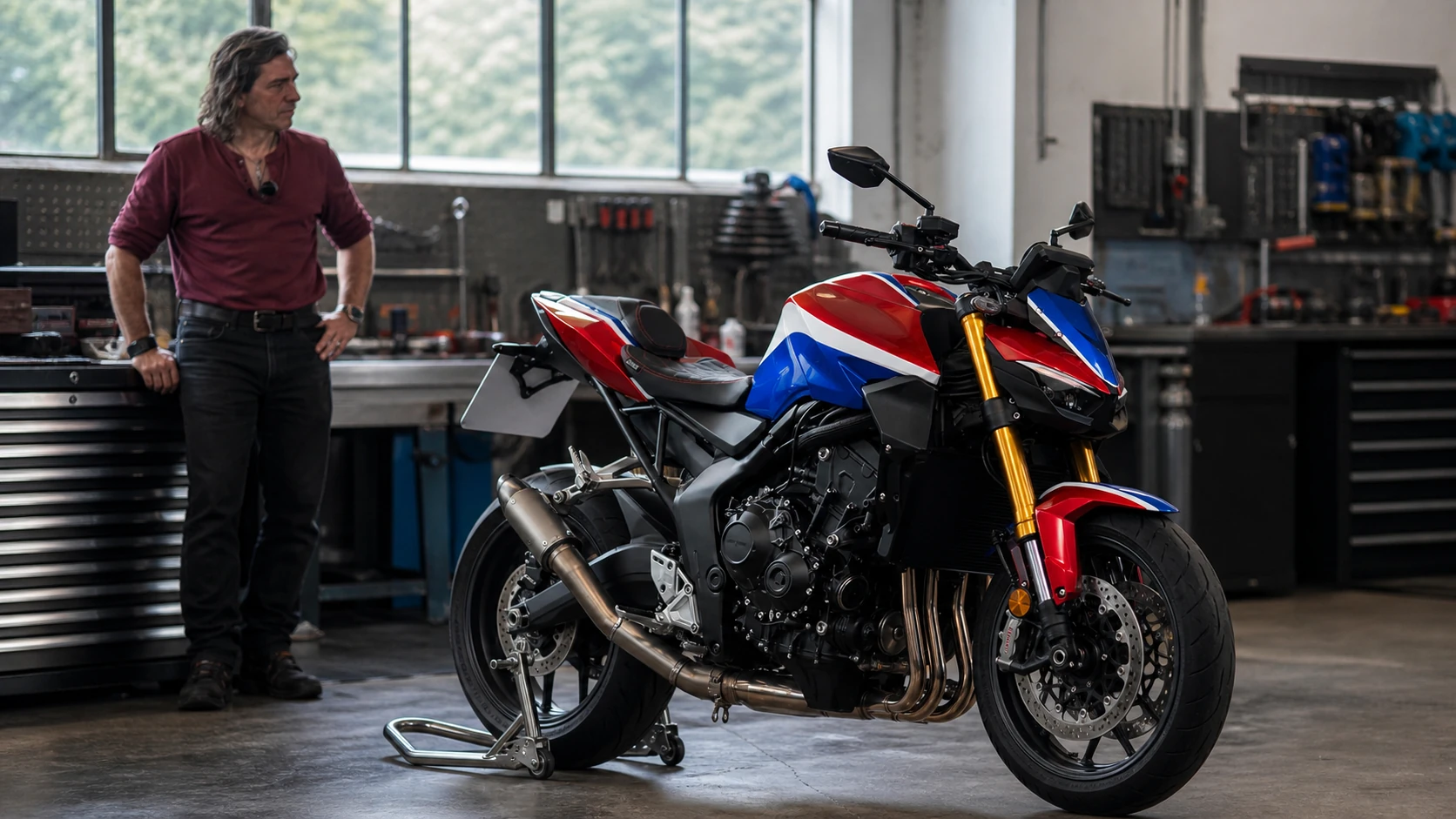
The donor Hornet SP already carried high-level equipment, including Brembo brakes, Showa front suspension and an Öhlins rear shock. Willison changed its appearance and rider contact points rather than attempting to replace the motorcycle’s main engineering.
The 5Four model received endurance-inspired red, blue and pearl-white paintwork, a hand-stitched leather seat, billet mirrors and controls, a compact tail arrangement and a titanium Racefit exhaust. Production was limited to 54 motorcycles.
Doble listed the model at £15,454, plus a preparation fee, during 2026. Each machine was assembled by Willison, giving buyers a direct connection to the designer rather than only a branded factory edition.
Television Career
Willison became familiar to viewers through several factual entertainment programmes connected with Henry Cole. His appearances include The Motorbike Show, Shed & Buried, Find It, Fix It, Flog It and Junk & Disorderly.
On The Motorbike Show, he has helped restore and modify motorcycles alongside Cole and engineer Allen Millyard. The programme gives Willison space to explain mechanical decisions while showing the time and effort required to return an old machine to dependable use.
In Find It, Fix It, Flog It, he worked on automotive objects and neglected machinery intended for resale. The format required practical judgment because the repair cost had to remain connected to the likely selling price.
His role in Shed & Buried became especially visible as the programme developed. Working with Cole and restorer Fuzz Townshend, Willison helped assess motorcycles, cars and other vehicles found in barns, garages and private collections.
During 2026, he remained involved in new episodes of Shed & Buried. He also received his own online feature, Skid Risk, focused on restorations, workshop advice and custom motorcycle projects. The series placed him more directly at the centre of the story than his usual supporting role beside Cole.
Design Style and Reputation
Willison’s motorcycles are usually defined by restraint. He prefers removing visual bulk, simplifying a rear section and improving the rider’s contact with the machine rather than covering it with decorative accessories.
Seats, grips, levers, mirrors and handlebars receive particular attention. These components may be smaller than an engine or frame, but they shape the experience every time the motorcycle is ridden. His exhaust choices also change both the appearance and sound of the finished bike.
Honda endurance-racing colours appear repeatedly in his work. The red, white and blue schemes reflect motorcycles he admired earlier in life and create a link between modern road models and racing history.
Willison’s public reputation rests on the same practical qualities. He is calm, direct and rarely theatrical. Television has made him recognizable, but his credibility comes from the sense that he would be building motorcycles whether cameras were present or not.
Marriage, Children and Private Life
Guy Willison has kept his family life outside his professional biography. No dependable first-party source has publicly identified a wife, partner or children.
His marital status is therefore not publicly confirmed. Websites that assign him a spouse or provide detailed domestic claims without direct evidence should not be treated as reliable.
Willison’s friendship with Henry Cole is sometimes misunderstood as a family relationship. They are close friends and long-term collaborators, but there is no confirmed evidence that they are related by blood or marriage.
His decision to keep personal matters private fits the way he presents himself publicly. Interviews and official profiles focus on motorcycles, engineering and work rather than his home life.
Health
There is no reliable public confirmation that Willison has been diagnosed with cancer or another serious medical condition. Health claims that appear on biography websites are generally unsupported by statements from Willison, his representatives or credible reporting.
His professional activity continued through 2026, including television appearances, online features and the assembly of new 5Four motorcycles. Continued work does not prove a person’s medical status, but it does show that he remained professionally active.
The most accurate position is that his health history is private. Specific diagnoses should not be presented as fact without direct confirmation.
Net Worth and Income Sources
Guy Willison’s net worth has not been publicly disclosed. Estimates found on celebrity biography sites lack access to his assets, debts, company interests, contracts or personal income.
His known income sources are likely connected to motorcycle design, custom building, television appearances and work associated with 5Four Motorcycles. Limited-edition motorcycles sell for substantial prices, but the retail cost is not the same as personal profit.
Each motorcycle must account for the donor bike, custom components, paint, specialist labour, dealer expenses, taxes and business overheads. Without financial statements showing Willison’s compensation or ownership, assigning a precise figure would be misleading.
His career has clearly produced commercial success and industry recognition. That does not provide enough information to support claims that he is worth a particular number of millions.
Recent Work and Current Status
Willison remained active in both television and motorcycle production during 2024, 2025 and 2026. He returned as a restoration expert in later series of Shed & Buried, working with Henry Cole and Fuzz Townshend on vehicles found across Britain.
The CB1000 Hornet SP 5Four became his main new production motorcycle during this period. The project showed that 5Four was still functioning as an active builder rather than existing only through earlier Honda and Norton editions.
In June 2026, new episodes of Shed & Buried began airing, with more instalments planned later in the year. Willison was also given a stronger individual platform through Skid Risk, which followed his workshop projects and allowed him to share more of his own methods.
As of August 2026, he had not retired or withdrawn from public work. His current career combines small-run motorcycle production, restoration and factual entertainment, continuing the same interests that began when he first dismantled an engine as a child.
Frequently Asked Questions
How old is Guy Willison?
Guy Willison was born in October 1962. He is 63 years old as of August 2026 and will turn 64 in October. His exact day of birth has not been publicly confirmed.
What is Guy Willison famous for?
He is famous for building and designing limited-edition motorcycles and for appearing on television with Henry Cole. His best-known projects include the Norton Commando 961 Street and several Honda-based 5Four models.
Why is Guy Willison called Skid?
“Skid” is the nickname used by his friends and television colleagues. A dependable public account explaining exactly when or why he received the nickname has not been published.
Why is the company called 5Four Motorcycles?
The name comes from Willison’s call sign during his years as a London motorcycle dispatch rider. He later used it for the company he founded to build limited-edition and bespoke motorcycles.
Are Guy Willison and Henry Cole brothers?
No confirmed evidence shows that they are brothers or otherwise related. They are lifelong friends and professional collaborators who have worked together in television, sound recording and motorcycle projects.
Is Guy Willison married?
His marital and relationship status is not publicly confirmed. He has kept information about a wife, partner or children outside his professional biography.
What is Guy Willison doing now?
As of August 2026, Willison remained active with 5Four Motorcycles and continued appearing in Shed & Buried. He was also featured in Skid Risk, an online series centred on his motorcycle restorations and custom builds.
Conclusion
Guy Willison’s television career is only the most visible part of a much longer working life. Before viewers knew him as Skid, he had already ridden extraordinary distances as a London courier, studied motorcycle engineering and repaired machines used under some of the hardest everyday conditions.
His later success grew from that experience. Norton and Honda did not simply hire a television personality to decorate motorcycles; they worked with a builder whose ideas had developed through decades of riding, workshop repairs and small-scale production.
Willison has also shown that a custom motorcycle does not need to reject modern factory engineering. His best-known designs preserve dependable mechanical foundations while giving owners something rarer, more personal and visibly connected to the person who built it.
Much of his private life remains unknown, and there is no need to fill those gaps with speculation. His public contribution is already clear: Guy Willison has turned a dispatch rider’s practical instincts into a respected design career, a distinctive motorcycle company and a television presence built on genuine skill.
