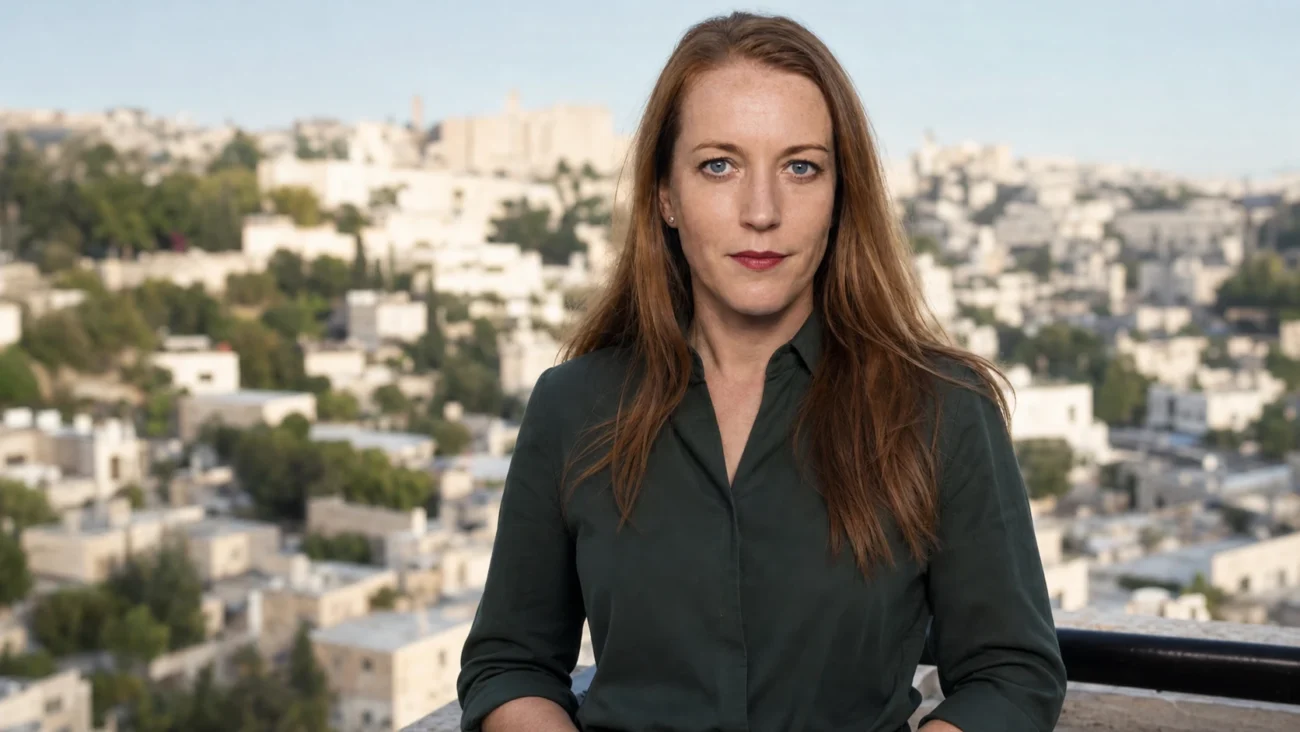
Yolande Knell is a BBC Middle East correspondent known for reporting from Israel, Gaza, the occupied West Bank, Egypt, and other parts of the region during periods of political upheaval, war, and humanitarian crisis. Based in Jerusalem, she has spent much of her career explaining events that are difficult to verify, emotionally charged, and closely contested by governments, armed groups, campaigners, and audiences.
Her work has included coverage of the 2011 Egyptian uprising, repeated conflicts between Israel and Palestinian armed groups, political change in Jerusalem and Ramallah, humanitarian conditions in Gaza, and disputes over access for foreign journalists. She appears across BBC television, radio, podcasts, and digital news, often reporting live as events develop.
Knell’s professional record is well documented, but her personal biography is not. Her exact age, date of birth, birthplace, education, marital status, children, and financial position have not been reliably confirmed. That privacy has led some biography websites to publish conflicting claims, making it necessary to separate her established reporting career from unsupported personal details.
Early Life and Family Background
Yolande Knell has not published a detailed account of her childhood or family background. Her parents’ names, occupations, and national origins are not part of the dependable public record, and she has not publicly discussed siblings or other close relatives.
Her birthplace and nationality are also unclear. Some online profiles describe her as British, while others claim that she was born or raised in South Africa. Those descriptions have not been confirmed by Knell, the BBC, or another authoritative biographical source.
Her long association with the BBC and her professional links to the United Kingdom do not prove where she was born or which citizenship she holds. Until a direct source provides that information, her early life should be treated as private rather than reconstructed from inconsistent internet biographies.
Age and Date of Birth
Yolande Knell’s exact date of birth is not publicly confirmed. Several low-quality websites state that she was born on March 11, 1975, but they do not provide a birth record, BBC biography, interview, or other dependable source for that date.
Some of the same websites contain clear errors about her job title, education, and awards. That weakens their claims about her age and personal history. Repetition across several pages does not make an unsupported date reliable, especially when the pages appear to copy from one another.
Her documented career shows that she was already producing BBC journalism by at least 2009 and reporting extensively from Egypt in 2010 and 2011. That provides a broad sense of her professional experience, but it does not establish a precise age. The responsible answer is that Knell’s age remains private or unverified.
Education and Entry into Journalism
Knell’s educational background has not been established through a dependable first-party source. Online biographies have named the University of Pretoria, the University of Oxford, and City, University of London, but the accounts conflict and provide no clear dates, degree titles, or verified alumni information.
It is possible that one of those claims is correct, but none should be presented as fact without stronger evidence. Knell has also not publicly described the training or early ambitions that led her into journalism.
Her first confirmed career years are easier to trace through published work. By the late 2000s, she was reporting for the BBC on political and social issues involving Israelis, Palestinians, and Egyptians. Those assignments suggest that she had already developed experience in foreign reporting, regional politics, and working with vulnerable sources.
Early Reporting in Egypt
Knell became closely associated with Egypt during the years before and after the 2011 revolution. Her work covered political opposition, emergency laws, minority communities, religious tensions, and the restrictions faced by people living under President Hosni Mubarak’s government.
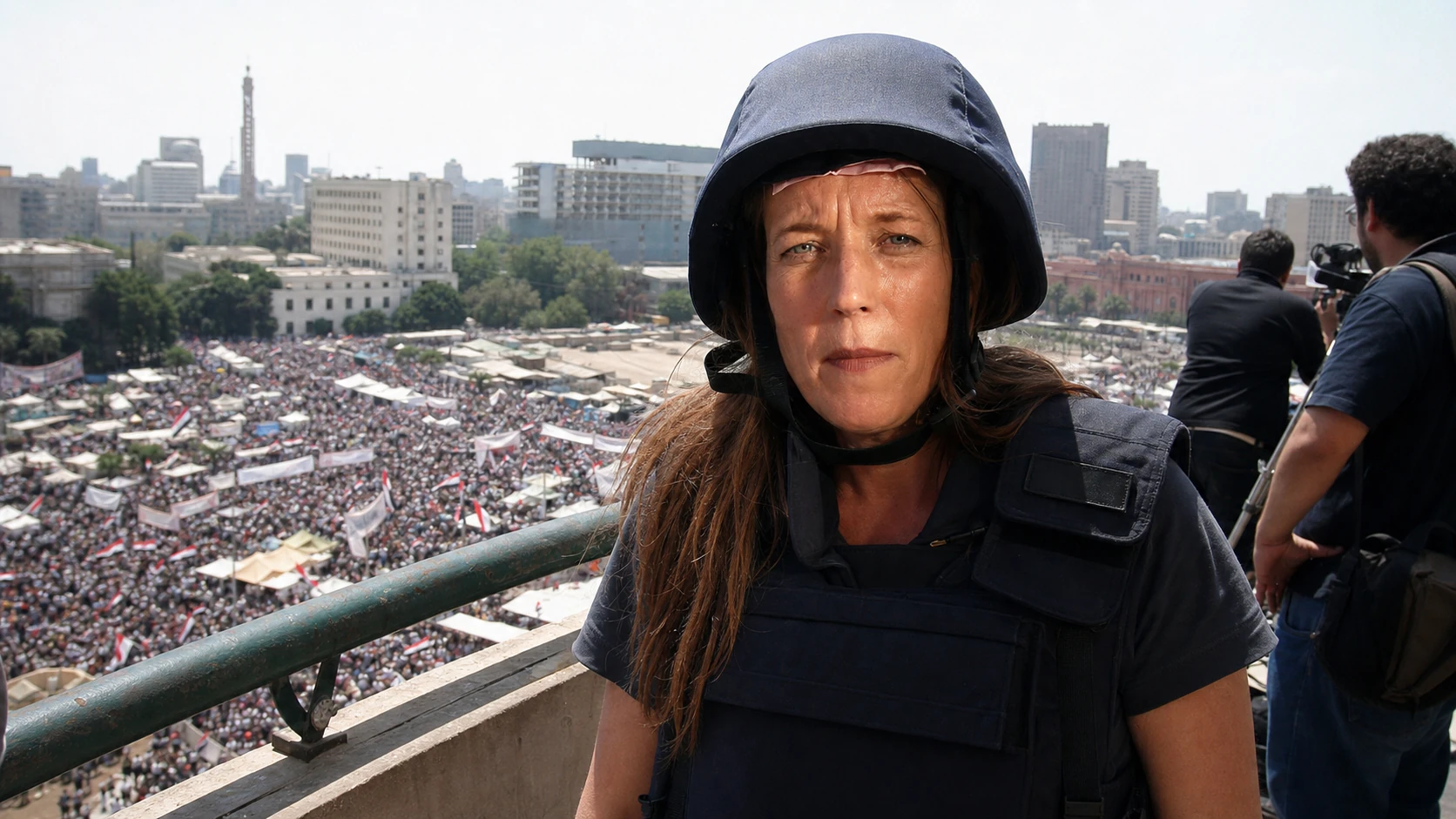
She reported on subjects that went beyond formal politics. Her articles included the experiences of gay Egyptians using the internet to find community, young couples entering unofficial marriages, and citizens challenging social and legal controls. These stories required careful sourcing because interviewees could face legal, religious, or family pressure.
When mass protests began in January 2011, Knell reported from Cairo as demonstrators gathered in Tahrir Square and demanded Mubarak’s removal. She described the wide range of Egyptians taking part, the uncertain position of the military, and the changing atmosphere as the government struggled to retain control.
Mubarak resigned on February 11, 2011, but Egypt’s political crisis did not end there. Knell continued covering military rule, elections, the rise of the Muslim Brotherhood, Mohamed Morsi’s presidency, economic difficulties, and renewed public unrest. Her reporting from this period helped establish her as a journalist able to follow a political transformation beyond its most dramatic television moments.
Move to the Jerusalem Bureau
By the early 2010s, Knell was reporting regularly from Jerusalem. Her beat expanded to include the Israeli government, Palestinian politics, East Jerusalem, the occupied West Bank, Gaza, religious institutions, settlements, property disputes, and regional diplomacy.

Jerusalem is one of the most difficult reporting bases in international journalism. The city’s status is disputed, and even basic descriptions of borders, neighbourhoods, legal authority, and sovereignty can provoke formal complaints. Correspondents must explain different historical and legal claims without presenting political language as neutral fact.
Knell’s work from Jerusalem has covered both major breaking news and slower social stories. She has reported on Palestinian families facing eviction, Israeli court decisions, religious tensions around holy sites, public demonstrations, tourism in Bethlehem, healthcare shortages, and internal political disagreements among both Israelis and Palestinians.
Her role has required movement between communities that often have sharply different accounts of the same event. A report about a military raid, rocket attack, demolished home, prisoner, or civilian death may involve witness testimony, official statements, medical records, video evidence, and legal claims that remain disputed long after the first broadcast.
Reporting From Gaza
Knell has covered Gaza during several rounds of conflict between Israel and Palestinian armed groups. Her reports have addressed Israeli air strikes, Palestinian rocket fire, ceasefire negotiations, civilian casualties, displacement, damaged hospitals, destroyed homes, and restrictions on movement and trade.
During the 2014 Israel-Gaza war, she reported from inside the territory as fighting continued. The conflict lasted 50 days and produced competing claims about military targets, civilian protection, warning systems, armed-group activity, and international humanitarian law.
Her reporting later included analysis of a United Nations commission that examined possible war crimes by Israel and Palestinian armed groups. Knell’s task was not to decide criminal responsibility herself but to explain the commission’s findings, the evidence it considered, and the responses from the parties involved.
Gaza reporting has also drawn criticism from organisations with opposing political positions. Pro-Israel monitoring groups have accused her of omitting the context of Hamas attacks or presenting Israeli actions unfairly. Critics sympathetic to Palestinians have argued that BBC coverage can give greater authority to Israeli officials or fail to convey the scale of Palestinian suffering.
Such criticism is a constant feature of the beat. It should be assessed against the full reports, available evidence, and BBC editorial standards rather than treated as proof that Knell personally supports one side.
Social and Historical Reporting
War has been a major part of Knell’s career, but it is not the whole of it. She has also reported on religion, healthcare, abuse, social restrictions, tourism, historical memory, and the daily effects of political division.
One of her television reports examined how ultra-Orthodox Jewish communities in Israel were responding to sexual-abuse allegations and public pressure linked to the wider #MeToo movement. The subject required sensitivity because victims, religious institutions, community leaders, and law-enforcement authorities often approached the issue from very different positions.
Knell has also written about Palestinian cancer treatment, public criticism of Hamas, conditions in East Jerusalem, and the recovery of Bethlehem’s tourism industry after pandemic restrictions. These reports reveal the practical consequences of political decisions in people’s homes, workplaces, hospitals, schools, and places of worship.
Her historical journalism has included work on the Balfour Declaration, the 1917 British statement supporting the establishment of a national home for the Jewish people in Palestine. By examining why that brief declaration remains celebrated by many Israelis and condemned by many Palestinians, she connected a century-old document to present political conflict.
The October 7 Attacks and Gaza War
The Hamas-led attacks in southern Israel on October 7, 2023, began one of the most demanding periods of Knell’s career. The attacks killed civilians and soldiers, and militants took hostages into Gaza. Israel responded with a large military campaign that caused extensive destruction, displacement, and loss of life in the territory.

From Jerusalem, Knell reported on the attacks, the hostage crisis, Israeli military operations, Palestinian civilian suffering, ceasefire talks, humanitarian aid, and growing international pressure. She also covered protests by hostage families and political arguments inside Israel over the government’s strategy.
A central problem was the lack of independent access to Gaza for foreign correspondents. Israel largely barred international journalists from entering the territory freely, allowing only limited military-controlled visits. Reporters could not independently travel, select interviewees, or inspect sites under ordinary journalistic conditions.
The BBC therefore depended heavily on Palestinian journalists and producers inside Gaza, along with remote interviews, satellite images, medical sources, aid agencies, official statements, and verification teams. That work provided essential information, but it could not fully replace unrestricted access by outside reporters.
Knell became part of the wider journalistic effort to explain why independent entry mattered. Without direct access, foreign news organisations had greater difficulty testing claims made by Israel, Hamas, witnesses, hospitals, aid groups, and international agencies.
Reporting in 2024, 2025, and 2026
During 2024, Knell continued covering ceasefire negotiations, humanitarian conditions, Israeli politics, military operations, and international accusations concerning the conduct of the war. Her broadcasts were criticised from opposing directions, reflecting the intense dispute over how the BBC described events and assigned responsibility.
In 2025, aid restrictions and warnings of hunger became central parts of her reporting. She explained disputes between the Israeli government and international leaders over military operations, the flow of food and medicine, and the effectiveness of proposed aid systems.
She also contributed to BBC discussions marking two years since the October 7 attacks. Working alongside journalists including Rushdi Abualouf, Jeremy Bowen, and Jon Donnison, she addressed the conflict’s history, the experience of reporting through the war, and questions from listeners.
In January 2026, Knell reported on legal efforts to challenge Israel’s ban on independent foreign-media access to Gaza. The case involved the Foreign Press Association and press-freedom groups arguing that continued restrictions damaged the public’s right to reliable information.
As of August 2026, her professional profile continued to identify her as a BBC Middle East correspondent. Her recent work showed that she remained active in Jerusalem and continued covering Israel, Gaza, the West Bank, and Palestinian affairs.
Marriage, Children, and Private Life
Yolande Knell has kept her personal life separate from her public work. There is no reliable confirmation that she is married, divorced, or in a publicly known relationship.
No husband, wife, or partner has been identified by Knell or the BBC. There is also no confirmed public information about whether she has children.
This absence of information should not be interpreted as evidence that she is single or childless. It simply means that she has not made those parts of her life public, and reputable biographies should respect that boundary.
Net Worth and Income Sources
Knell’s net worth is not publicly known. Websites that assign her a precise financial figure do not provide evidence from salary disclosures, property records, investments, contracts, or business holdings.
Her primary known source of income is her work as a BBC journalist and foreign correspondent. That position may include salary and employment benefits, but her individual compensation has not been disclosed.
She is not publicly associated with a major private company, product line, property portfolio, or commercial media business. Any estimate of her wealth would therefore be speculative and should not be presented as established fact.
Public Image and Criticism
Knell is known for a calm, restrained broadcasting style. She often speaks from locations where information is changing quickly and where every word may be challenged by political officials, activists, advocacy organisations, and viewers.
Her work has attracted repeated scrutiny from pro-Israel media groups, which have accused her of missing legal context, understating Palestinian violence, or adopting Palestinian framing. Other critics have argued that BBC reporting gives too much space to Israeli government claims or fails to humanise Palestinian victims equally.
Receiving criticism from both sides does not automatically prove balance. The stronger test is whether a report identifies its sources, distinguishes claims from verified facts, corrects errors, and gives readers enough context to understand why accounts differ.
Knell’s career shows the pressure placed on correspondents covering a conflict in which history, law, identity, and current violence are inseparable. Her public reputation rests less on personal celebrity than on her continued presence in one of journalism’s most closely examined assignments.
Frequently Asked Questions
Who is Yolande Knell?
Yolande Knell is a BBC Middle East correspondent based in Jerusalem. She reports on Israel, Gaza, the occupied West Bank, Palestinian politics, regional diplomacy, and humanitarian issues.
How old is Yolande Knell?
Her exact age is not publicly confirmed. Claims that she was born on March 11, 1975, have not been supported by a dependable first-party source.
Where was Yolande Knell born?
Her birthplace has not been reliably established. Some websites describe her as British or South African-born, but those claims remain unconfirmed.
Is Yolande Knell married?
Her marital status is private. No spouse or partner has been publicly confirmed by Knell, the BBC, or a reliable biographical source.
Does Yolande Knell have children?
There is no confirmed public information about whether she has children. She does not discuss her family life in her professional reporting.
Where did Yolande Knell study?
Her education has not been publicly verified. Conflicting online profiles name several universities, but none of those claims has been supported by dependable evidence.
What is Yolande Knell doing now?
As of August 2026, she remained active as a BBC Middle East correspondent. Her recent work focused on Israel, Gaza, Palestinian affairs, humanitarian conditions, and restrictions on independent media access.
Conclusion
Yolande Knell has built her public identity through sustained reporting rather than personal publicity. Her career has taken her from Egypt during the fall of Hosni Mubarak to Jerusalem and Gaza during repeated wars, political crises, and humanitarian emergencies.
The work demands more than appearing on television during breaking news. It requires evaluating conflicting claims, protecting sources, explaining disputed history, and reporting under restrictions that can make independent verification difficult.
Much of Knell’s private biography remains unknown, including her age, family background, education, relationships, and finances. Leaving those details unfilled is more accurate than repeating claims that cannot be traced to reliable sources.
Her importance lies in the record that can be verified: years of BBC reporting from one of the world’s most contested regions, continued scrutiny from audiences on all sides, and a professional focus on explaining events whose consequences extend far beyond the places where they occur.
